
Did you know that nearly 60% of remote workers say their home environment directly affects their daily productivity? That makes the way you approach decorating a home office more than just aesthetics—it’s a practical investment in focus and well-being.
This short guide offers essential tips for home office decor to help you design a space that feels both professional and personal. Start by prioritizing natural light: position your desk near a window or under a skylight whenever possible to boost alertness and mood.
Combine ergonomics with style—choose an adjustable chair and desk, add monitor stands to keep screens at eye level, and slip in a footrest to support circulation. For small rooms, pick multifunctional furniture and vertical storage to keep surfaces clear and create a sense of openness.
Bring nature indoors with low-maintenance plants like snake plants or pothos, and use calming blues or greens to enhance concentration. Cable management, wireless peripherals, and a dedicated charging station will keep your setup tidy and professional.
For practical inspiration and layout ideas, explore expert home office design tips from professional kitchens and interiors at Laurysen Kitchens’ blog. Incorporating principles from designers such as Florence Knoll and Mies van der Rohe can help you blend form and function with lasting results.
Key Takeaways
- Maximize natural light and place your desk near windows to improve focus.
- Prioritize ergonomic furniture—adjustable chairs and desks reduce fatigue.
- Use vertical and multifunctional storage to make small offices work harder.
- Minimize cable clutter with wireless devices and organized cable channels.
- Introduce plants and calming color schemes to boost mood and creativity.
- Balance comfort, style, and professionalism for measurable productivity gains.
Why Thoughtful Home Office Design Boosts Productivity and Well-Being
Design choices shape how you feel and work. A workspace that balances order with comfort cuts visual clutter and lowers mental load. Small moves like coordinated color, neat storage, and proper lighting create a steady backdrop for focus and long stretches of productive work.
How aesthetics influence focus and motivation
Clean lines and intentional styling reduce distractions and help the brain prioritize tasks. When surfaces are tidy and essential items are within reach, checking email or drafting proposals feels easier. Use simple office aesthetics tips such as a limited palette, minimal accessories, and hidden storage to keep attention on work, not on clutter.
Psychological benefits of a tailored workspace
Natural light, plants, and ergonomic furniture improve comfort and mood. Personalization—favorite art, a meaningful book, or a photo—fosters ownership and pride. Those elements boost motivation because the space feels like yours and supports sustained effort during longer workdays.
Evidence-backed outcomes: productivity, reduced stress, and confidence
Research shows softer natural light ranks high for supporting focus, while ergonomic chairs and adjustable desks raise efficiency. Thoughtful choices lead to measurable gains in home office productivity and lower stress levels, giving people more confidence in their daily output. For practical layouts and storage ideas, explore this guide for inspiration and evidence-informed tips: home office ideas that inspire productivity.
| Design Element | Benefit | Actionable Tip |
|---|---|---|
| Natural Light | Improves alertness and mood | Place desk near a window; use sheer curtains to diffuse glare |
| Ergonomics | Reduces fatigue, increases efficiency | Choose an adjustable chair and monitor riser for posture |
| Decluttered Surfaces | Lower cognitive load and stress | Adopt daily tidying and labeled storage bins |
| Personal Touches | Boosts motivation and belonging | Limit to 3 meaningful items to avoid distraction |
| Lighting Strategy | Reduces eye strain and improves focus | Combine ambient light with adjustable task lamps |
| Acoustic Control | Enhances call clarity and concentration | Use rugs, panels, or noise-canceling headphones |
Start by looking at how you work each day. Small changes often yield the biggest comfort and focus gains. Use practical choices that blend comfort with a clear look so your space feels calm and productive while reflecting your taste.
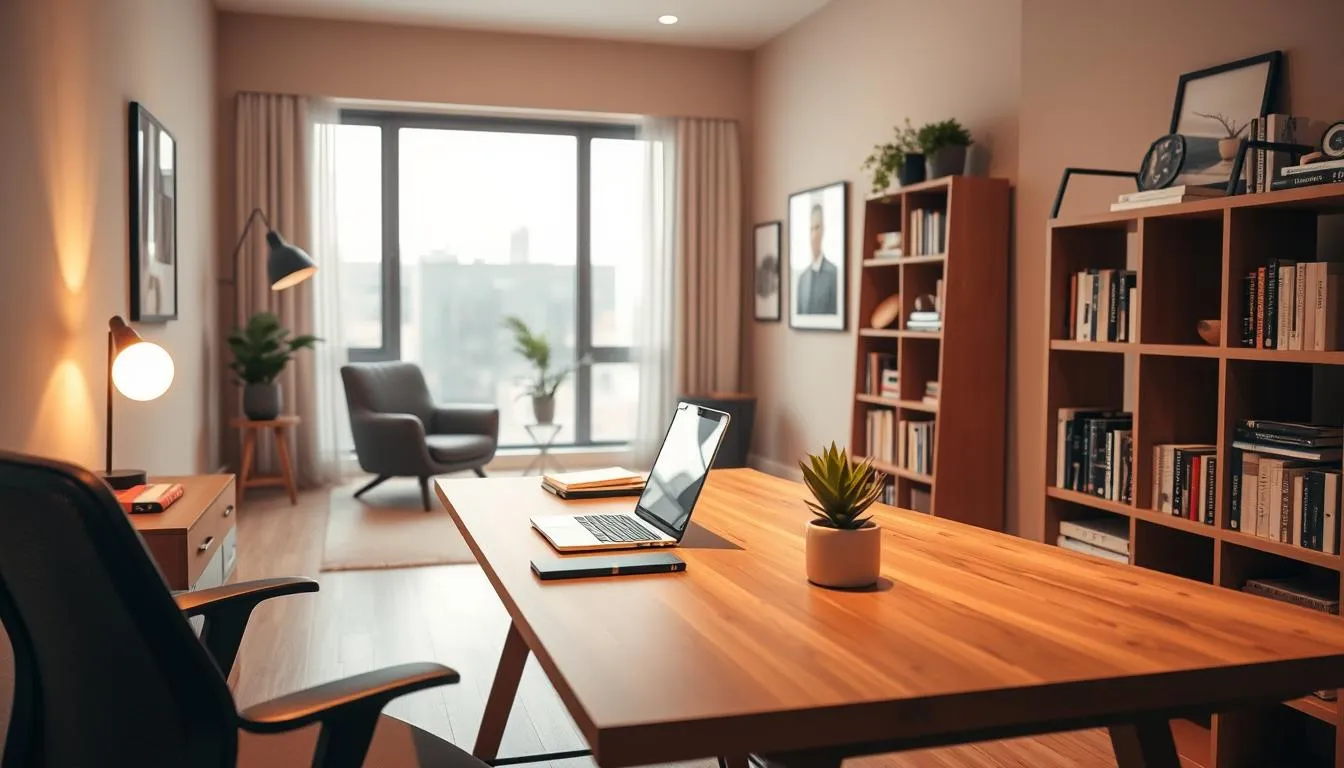
Primary design principles to prioritize
Put ergonomics first. An adjustable chair and the right desk height reduce fatigue during long calls or focused work. Pick a monitor setup that keeps your gaze level and your neck neutral.
Maximize natural light where possible. Place desks near windows and use sheer curtains to soften glare. Proper light boosts mood and cuts eye strain.
Keep surfaces decluttered. Use integrated storage like under-desk drawers and floating shelves so essentials stay within reach without crowding your workspace.
Bring in biophilic elements. A few low-maintenance plants or a wooden desk surface improves air quality and creates a calmer backdrop for work.
Balancing style and functionality for daily use
Choose pieces that solve problems while looking good. An adjustable chair with a clean silhouette gives support and keeps the room tidy.
Opt for a sit-stand desk with cable management to reduce visual chaos. Concealed cords and slim power strips make a big aesthetic difference.
Modular storage systems work across projects. Use labeled bins for paper tasks and open trays for items you use every day. These choices make decorating home office spaces easier and more efficient.
How to adapt tips to different room sizes and work styles
In compact rooms, select streamlined furniture and vertical storage. A wall-mounted desk or a narrow console can free floor area without sacrificing surface space.
Larger rooms allow for zoned layouts. Float the desk in the center to create a work island and add a reading nook or lounge chair in a corner for breaks.
Match layout to workflow. Multiple monitors need a wider desk and monitor arms. Paper-heavy roles benefit from lateral filing near the work surface. Creative makers should reserve a flat, durable table for materials.
| Scenario | Key Furniture | Storage Solution | Lighting |
|---|---|---|---|
| Small studio apartment | Wall-mounted desk, slim task chair | Vertical shelving, under-desk drawers | Window task light, compact LED lamp |
| Dedicated spare room | Full sit-stand desk, ergonomic chair | Modular cabinets, closed storage | Layered lighting with dimmer |
| Creative studio | Large worktable, supportive stool | Open bins, pegboard for tools | Adjustable task lights and daylight bulbs |
| Multitask home office | Corner desk, monitor arms | Rolling file cabinet, cable trays | Desk lamp plus overhead ambient light |
Lighting Strategies to Reduce Eye Strain and Improve Mood
Good lighting changes how a home office feels and how well you work. Start with natural light, add layers, and choose smart controls to match your day. These moves improve comfort, reduce eye strain, and support a calmer work rhythm while fitting into lighting for home office plans and smart home office decor tips.
Maximizing natural light and desk placement near windows
Place your desk close to a window when possible. Side-facing windows cut glare on screens better than direct backlighting. Use sheer curtains or Venetian blinds to diffuse harsh sun without losing brightness.
Anti-glare screen films and matte monitor finishes help when light is strong. Window-facing desks give flattering light for video calls and support alertness during daytime work.
Layered lighting: ambient, task, and accent
Combine ambient ceiling lights, a focused task lamp, and subtle accent lighting for depth. A dimmable ceiling fixture sets overall brightness. A movable LED desk lamp provides focused illumination for documents and keyboard work.
Accent options, such as wall sconces or LED strips behind shelves, reduce contrast between bright and dark areas. This lowers eye strain and enhances office aesthetics tips by adding visual interest.
Smart lighting and color temperature recommendations
Choose smart, dimmable bulbs to match your work rhythm. Cooler temperatures around 5000K boost alertness for morning tasks. Warmer tones near 2700–3000K help your body wind down in the evening.
Use app-controlled schedules to shift color and intensity through the day. Full-spectrum desk lamps mimic daylight when windows are limited. Position lights to avoid screen glare and harsh shadows for a cleaner look that supports home office decor tips.
| Lighting Element | Purpose | Recommended Specs |
|---|---|---|
| Natural light | Boosts mood and reduces reliance on artificial light | Desk near window, sheer curtains, anti-glare film |
| Ambient lighting | Provides even room illumination | Dimmable ceiling fixture, 3000–4000K, 200–500 lux |
| Task lighting | Focuses light for reading and screen work | Adjustable LED desk lamp, 4000–5000K, CRI 90+ |
| Accent lighting | Adds depth and reduces contrast | LED strips, wall sconces, warm 2700–3000K |
| Smart controls | Automates color and intensity changes | App-controlled bulbs, schedules, voice assistant compatible |
Good ergonomics change how you feel after a long workday. Thoughtful furniture and movement reduce pain, boost focus, and keep energy steady. Use these practical ideas to shape a healthier workspace that fits your body and tasks.
Selecting an ergonomic chair and adjustable desk
Pick a high-quality adjustable chair with lumbar support to cut back pain and encourage upright posture. Look for adjustable armrests, seat depth, and a tilt lock so the chair matches your frame. Combine that chair with an adjustable desk or a sit-stand converter to switch positions through the day. Many people find brands like Herman Miller and Steelcase deliver durable adjustments that make a real difference.
Proper monitor height, keyboard placement, and posture tips
Set your monitor at eye level and an arm’s length away to avoid neck strain. Place frequently used items inside arm’s reach to limit reaching. Use an external keyboard and mouse when working on a laptop, and keep wrists neutral with the keyboard slightly angled. These small shifts help maintain proper posture and reduce micro-tension in shoulders and forearms.
Movement strategies: sit-stand desks, reminders, and microbreaks
Alternate sitting and standing in 30–60 minute cycles to improve circulation and lower fatigue. Program reminders on your phone or use apps to prompt short stretches or a quick walk. Build microbreaks into your schedule: two minutes to stand, one minute to roll shoulders, or five minutes to walk every hour. This approach pairs well with ergonomic office furniture to boost comfort and productivity.
For style and function, blend these practices with the best office decor ideas. A tidy, well-arranged desk plus the right chair and desk make it easier to keep healthy habits. Use home office decor tips to place storage and lighting so movement stays natural and efficient.
- Keep frequently used items within arm’s reach to cut strain.
- Match desk height so forearms are parallel to the floor while typing.
- Use contrasting textures and soft accents from the best office decor ideas to signal different work zones.
Smart Storage Solutions to Keep Clutter at Bay
Clear storage makes work feel easier. Start by choosing modular systems that fit your routines. Customizable cabinets and shelving adapt as tasks change, giving a tidy backdrop for focusing on projects and decorating home office spaces with purpose.
Under-desk units keep essentials within reach without crowding the room. Mobile pedestals and slim drawer units tuck away paperwork and supplies. These pieces free floor space while supporting neat habits that match practical home office decor tips.
Modular shelving, under-desk units, and vertical storage ideas
Wall-mounted shelves and tall cabinets make the most of vertical space. Add open shelves for frequently used items and closed cabinets for clutter that needs hiding. A mix of display and concealment keeps a polished look when decorating home office corners.
Pick finishes that coordinate with your furniture. Neutral wood or matte white blends with most palettes, letting art or a plant add personality. For flexible workdays, modular shelves let you rearrange zones without heavy lifting.
Closet and nook conversions for hidden “cloffice” setups
Underused closets and alcoves convert well into compact workstations. For built-ins, aim for an 8 by 10 foot footprint. Floating desks plus cabinetry fit comfortably in a 10 by 13 foot nook. These conversions hide clutter and create a private focus zone.
Use shallow shelving and labeled drawers to avoid a crowded feel. Sliding doors or a curtain keeps the cloffice discreet when work ends. This approach pairs strong storage strategy with thoughtful decorating home office choices.
Decluttering systems: assess, categorize, and quarterly maintenance
Make a simple decluttering plan. Inventory daily items, group by how often you use them, then remove what you no longer need. Quarterly reviews prevent slow build-up and reclaim time lost to disorganization.
Use labeled folders, drawer dividers, and uniform containers to keep things predictable. If you want a starter guide, check practical tips at smart storage solutions for home offices. Small systems reduce decision fatigue and reinforce your home office decor tips.
- Quick wins: mobile pedestals, cable clips, and a weekly five-minute tidy.
- Long-term: modular shelving that grows with your needs.
- Maintain: scheduled quarterly purges to keep surfaces clear.
Tech Setup and Cable Management for a Clean Aesthetic
Designing a neat workspace starts with a smart tech setup for home office use. A focused layout, careful placement of monitors and peripherals, and thoughtful cable routes create calm. These choices support good posture, reduce visual clutter, and make decorating home office spaces feel intentional rather than chaotic.
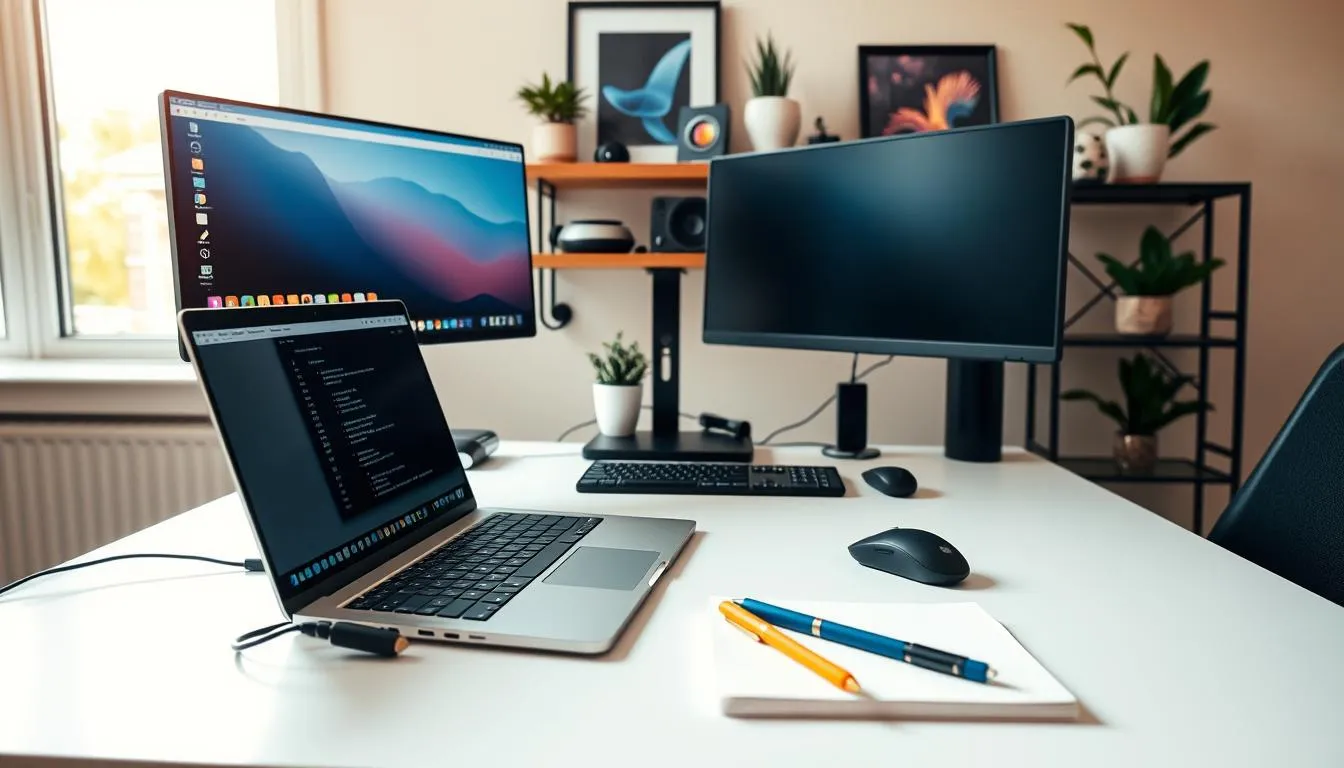
Monitor arms and docking stations
Use monitor arms or wall mounts to free desk surface and adjust screen height. A single or dual VESA arm from Ergotron or Humanscale keeps monitors at ergonomic eye level. Add a USB-C docking station from CalDigit or Anker to centralize power and ports, cutting down on cables and adapters.
Minimalist tech integration
Pick devices with finishes that match your color scheme to blend tech with decor. Wireless keyboards and mice from Logitech reduce visual noise and simplify cleaning. Keep chargers in one drawer or a decorative cable box to reinforce office aesthetics tips while staying practical.
Cable trays, sleeves, and concealing power strips
Install an under-desk cable tray and use braided sleeves or Velcro clips to group cords. Conceal power strips inside a slotted cable box or behind baseboards. Route HDMI and power lines through cable channels in cabinetry for a seamless look when decorating home office areas.
Acoustic comfort and call clarity
Add a rug and soft furnishings to absorb sound and reduce echo. Hang acoustic panels behind the main camera to improve vocal clarity during meetings. Place the microphone close to your mouth and angle the camera to avoid reflective surfaces that cause noise or glare.
Practical layout tips
Position screens to face away from direct window glare and keep monitors slightly below eye level for posture. Group docking stations, hubs, and surge protectors on one side of the desk so cords run along one discreet path. These small moves support office aesthetics tips and make everyday use easier.
Color Schemes That Enhance Focus and Creativity
Choosing the right color schemes for home office setups can change how you feel and work. A calm palette helps focus. Brighter accents spark new ideas. Use the suggestions below to shape a workspace that supports tasks and creative bursts.
Blue and green palettes for calm and concentration
Soft blues and muted teals promote steady concentration and emotional balance. Designers often pick shades from pale sky blue to steel blue for rooms used for heavy focus work.
Greens such as sage, olive, and emerald create a biophilic link that lowers stress and helps cognition. Test swatches near windows to see how natural light shifts each tone through the day.
Using yellow, red, and orange accents to stimulate creativity
Pale yellow adds a gentle boost to creative thinking when used on accessories or a single wall. Small bursts of red or orange bring energy and alertness.
Keep warm accents limited to lamps, cushions, art, or a single chair so they lift mood without overwhelming the room. Try temporary items first to judge their effect before repainting.
Balancing bold colors with neutrals for a flexible space
Pair saturated hues with warm whites, soft grays, or beige to avoid visual fatigue. A white-palette strategy gives a clear, calm backdrop that adapts to changing furniture and seasonal accents.
Consider finish choices: matte walls reduce glare, eggshell reflects light, and semi-gloss highlights trim. Use high-gloss on select furniture pieces to create contrast and depth.
For palette ideas and specific paint names that work well in home studios, consult curated resources such as Benjamin Moore’s guide on home office paint colors at home office paint colors. Testing with fabrics and lamps under different light temperatures helps you lock in the right palette for long days at the desk.
| Goal | Suggested Hues | Where to Use |
|---|---|---|
| Calm focus | Sky blue, Del Mar Blue 704, Blue Danube 2062-30 | Full walls, large rugs, curtains |
| Biophilic calm | Sage, Guilford Green HC-116, High Park 467 | Accent wall, plant backdrops, upholstery |
| Creative boost | Pale yellow, small red or orange accents | Lamps, cushions, artwork, chairs |
| Neutral balance | Simply White OC-117, Silver Satin OC-26, warm beige | Trim, built-ins, large furniture |
| Finish strategy | Matte for walls, eggshell for reflectivity, high-gloss for furniture | Walls, millwork, shelving |
A few green touches lift mood, sharpen focus, and make a workspace feel alive. Use biophilic design to weave natural elements into your room. This creates a calming backdrop that supports creativity and reduces stress when you are decorating home office areas.
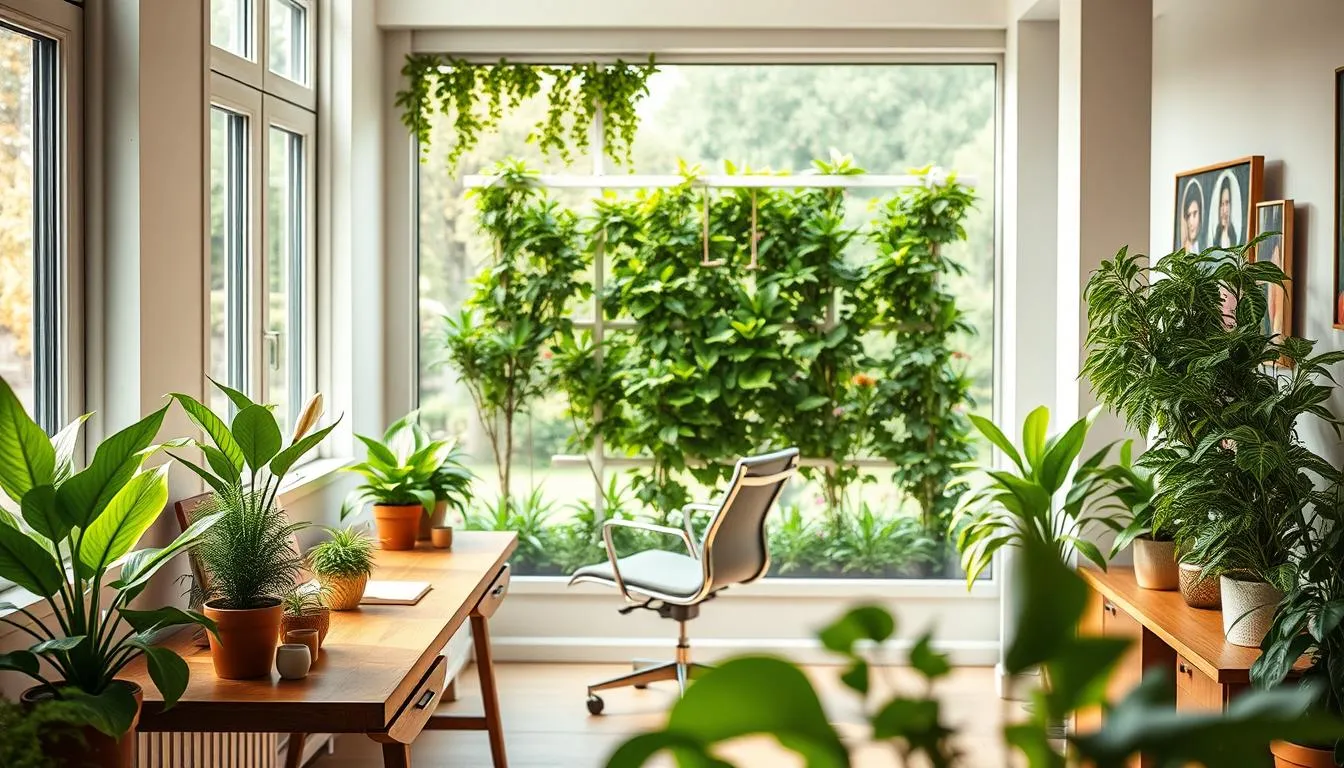
Benefits of plants for air quality, mood, and creativity
Plants can make air feel fresher and boost perceived air quality. Their presence offers visual relief during long tasks and can lower stress. Studies link greenery to improved attention and creative problem solving, so add a mix of foliage to reinforce those gains while you apply home office decor tips.
Low-maintenance plant recommendations for busy people
Choose hardy varieties that tolerate inconsistent light and watering. Snake plant and ZZ plant thrive with little care. Pothos vines handle varied windows and add vertical interest. Small succulents sit on a desk without crowding the surface. These picks suit people who want the benefits of plants without daily upkeep while decorating home office spaces.
Natural materials and textures: wood, cork, linen, and stone
Pair plants with warm materials to deepen the biophilic effect. A wooden desk anchors the space. Cork pinboards provide soft texture and practical function. Linen cushions and curtains add breathability. Stone accessories, like a small marble tray, bring tactile contrast. Mixing these elements makes your room feel grounded and intentional when choosing home office decor tips.
Place larger plants near windows or in side zones to avoid glare on screens. Keep small pots on shelves or a corner of the desk to deliver immediate benefits. A simple combo—wooden desk, cork mat, linen chair cushion, and a snake plant—creates a cohesive look that follows biophilic design principles for a healthier workspace.
| Plant | Light Needs | Care Level | Benefit |
|---|---|---|---|
| Snake Plant (Sansevieria) | Low to bright, indirect | Very low | Air purification and tough tolerance |
| ZZ Plant (Zamioculcas zamiifolia) | Low to medium | Very low | Glossy foliage, durable in varied conditions |
| Pothos (Epipremnum aureum) | Low to bright, indirect | Low | Fast-growing vine for shelves or hanging pots |
| Succulents (Echeveria, Haworthia) | Bright light | Low | Compact, decorative, ideal for desks |
Choosing a style helps shape mood and focus. Use a single dominant influence and add subtle nods from others to keep the space cohesive and personal. These office aesthetics tips aim to guide choices that support productivity while reflecting character.
Modern and minimalist spaces rely on clean lines, uncluttered surfaces, and purposeful furniture. Think Mies van der Rohe’s simplicity and John Pawson’s restraint. A pared-back desk, hidden storage, and good task lighting are core elements that let work take center stage.
- Keep surfaces clear with cabinet-door storage that hides papers and a printer.
- Choose a neutral palette and one accent material, such as linen or leather, for warmth.
- Prioritize an ergonomic chair and quality task lighting for long sessions.
Industrial, warm classic, and contemporary mixes let personality come through. Industrial brings metal and exposed finishes. Warm classic uses burl wood, linen, and leather for a cozy, sophisticated feel. Contemporary mixes pair textural materials with practical layouts.
- Combine raw metal with natural wood to balance grit and comfort.
- Use built-ins or multifunctional furniture to maximize compact footprints like 8 x 10 feet.
- Float a desk to create a focal point and consider window placement for flattering video backgrounds.
Iconic designer influences can be adapted without copying. Florence Knoll’s integrated, functional furniture brings order. Jean Prouvé’s industrial pieces add honest craftsmanship. Use one signature idea and reference others through lighting, hardware, or a single furniture piece.
For more visual inspiration, browse a curated gallery of real rooms to see how designers blend form and function at design-forward home offices.
Personalization matters. Add meaningful objects that spark joy, keep quarterly decluttering routines, and choose calming palettes like Benjamin Moore’s Blue Bayou to support sustained focus. These home office decor tips and best office decor ideas will help you craft a workspace that feels both purposeful and inviting.
Personalization and Backgrounds for Video Meetings
A well-composed background makes a strong first impression and supports your message. Think of the area behind your camera as part of your personal brand. Use simple choices to keep attention on you while showing a bit of personality and professional taste.
Creating an attractive backdrop with art and architecture
Design a small gallery wall or highlight architectural elements like crown molding and built-in bookshelves. A curated cluster of frames from West Elm or a single medium-sized print by a known photographer reads as intentional. Keep scale in mind so the pieces sit comfortably behind your head and shoulders on screen.
Displaying meaningful objects without clutter
Limit visible objects to three to five curated items. Use a ceramic vase, a hardcover by Penguin Random House, and a small plant such as a pothos. These pieces suggest personality while avoiding visual noise. Rotate items seasonally to refresh the look and maintain interest.
Lighting and camera placement for flattering calls
Place the camera at eye level to avoid unflattering angles. Use soft front lighting from a north-facing window or a diffused lamp to reduce shadows. Avoid strong backlight by positioning bright windows behind the camera rather than behind you.
For larger rooms, float the desk to create depth and a dynamic background. In compact spaces, keep palettes neutral and surfaces tidy to feel calm on camera. These small moves improve how your space reads in meetings and support confident, clear communication.
Pair these approaches with practical decorating home office habits to keep the space ready for sudden calls. Follow concise home office decor tips for consistency so your background always looks polished during video meetings.
Small Space Strategies: Making a Compact Office Work Harder
A compact office can feel calm and efficient with a few smart choices. Pick slim-profile furniture, hidden-storage sofas, and desks that fit an alcove without overwhelming the room. These small home office ideas turn tight footprints into focused work zones.
Floating desks and wall-mounted shelves free floor space while keeping essentials within reach. A wall-mounted desktop paired with vertical shelving and integrated outlets gives a lighter visual weight. For inspiration on fold-away desks and multipurpose pieces, see this practical guide.
Furniture choices for tight footprints and alcove offices
Choose compact desks under 40 inches when space is limited. Slim task chairs without bulky arms save room and slide under the desk. Built-in benches with storage or a narrow console with drawers make alcoves fully usable.
Floating desks, wall-mounted storage, and multipurpose pieces
Install a fold-down desk to reclaim floor space when the workday ends. Use wall-mounted cabinets and open shelves to keep frequently used items visible and organized. Multipurpose furniture, like a desk with integrated filing or a sofa that doubles as guest seating, extends function without clutter.
Visual tricks to make a small office feel larger and calmer
Light-colored walls reflect daylight and make a room feel airier. Mirrors placed opposite windows amplify natural light and depth. Keep a consistent color palette and uniform containers to reduce visual noise and create cohesion.
Layer lighting with a ceiling fixture and a focused task lamp for work clarity. Vertical shelving draws the eye upward, boosting perceived height. When possible, reserve surfaces for daily essentials only to maintain a serene, productive space that reflects the best office decor ideas and practical home office decor tips.
Storage of Section with H3s Randomized
A tidy desk helps focus. Thoughtful storage choices cut the time you spend hunting for supplies and clear mental clutter. Use consistent systems that match your decorating home office choices and support daily routines.
Implementing labeled containers and uniform storage for cohesion
Pick matching bins, file boxes, and drawer trays to create a unified look. Label each container with a simple word or icon so you can find things fast. Labels pair well with decorative touches when decorating home office, keeping style and function balanced.
Underutilized spots: above-desk shelves, corners, and landings
Use vertical space with floating shelves or wall cabinets to free up your desk. Corner shelving turns awkward zones into places for reference books or plants. Convert a landing or small closet into a hidden stash for bulky electronics and seasonal items, using these storage solutions for home office to maintain order.
Easy-to-follow routine to keep surfaces clear daily
Adopt a short end-of-day tidy: return items to labeled containers, clear one small surface, and prep tomorrow’s essentials. Keep daily items within arm’s reach and stow less-used things away. Pair this habit with quarterly deep declutters to prevent buildup and follow reliable home office decor tips that focus on longevity.
- Daily tidy: 5 minutes to reset the workspace.
- Weekly check: restock supplies and empty waste.
- Quarterly purge: donate or recycle items you no longer use.
Good storage choices save time and reduce stress. When you combine practical storage solutions for home office with thoughtful decorating home office moves, your workspace becomes a place that supports both productivity and comfort.
Conclusion
Good home office decor tips start with basics: prioritize natural light, choose ergonomic furniture, and keep storage simple and decluttered. Layered lighting, biophilic touches like a pothos or fiddle leaf fig, and a tech setup that hides cables make the space feel calm and professional. These best office decor ideas build a room that supports focus and comfort.
Design should follow your workflow and personality. When you tailor office aesthetics tips to how you work, you boost productivity, reduce stress, and spark creativity. Loving where you work helps you work better, whether you prefer a minimalist desk with a pop of color or a warm, wood-filled corner with plants.
Start with one immediate change: improve lighting, upgrade your chair, or add a simple storage system. Schedule a quarterly declutter and then add color accents or a few low-maintenance plants over time. Use these steps and the tips above to transform your workspace into a stylish, efficient home office that supports long-term focus and well-being.
FAQ
What are the most important home office decor tips to boost productivity?
Prioritize natural light, ergonomics, decluttered storage, layered lighting, and biophilic elements. Place your desk near a window when possible, invest in an adjustable chair and sit-stand desk, use modular storage to keep surfaces clear, and add plants or natural materials. These choices reduce visual clutter, support posture, and improve focus—measurable outcomes include better efficiency and reduced stress.
How can I maximize natural light without creating screen glare?
Position the desk perpendicular to windows or slightly angled so direct sunlight doesn’t hit the monitor. Use sheer curtains or blinds to diffuse harsh light and consider anti-glare screen films. For video calls, designers often prefer window-facing desks for flattering light, but use adjustable shades to avoid glare during peak sun.
What lighting setup reduces eye strain and supports mood throughout the day?
Use layered lighting: ambient (dimmable ceiling light), task (adjustable LED desk lamp with movable arm), and accent (sconces or LED strips). Match color temperature to the time of day—cooler (~5000K) for alert daytime tasks and warmer (2700–3000K) for evening. Smart, dimmable bulbs let you change intensity and color temperature via apps for optimal comfort.
Which ergonomic features should I look for in a chair and desk?
Choose a chair with adjustable lumbar support, seat depth, and armrests to fit your body. For desks, a motorized sit-stand desk or a reliable converter helps alternate posture. Aim for forearms parallel to the floor while typing and keep monitors at eye level about an arm’s length away to reduce neck strain.
How do I set up monitor and keyboard placement for the best posture?
Place the top of the monitor at eye level and about an arm’s length away. If using a laptop, raise it on a stand and use an external keyboard and mouse. Keep wrists neutral with the keyboard slightly angled and the mouse close to avoid reaching. Monitor arms can free desk surface and allow precise elevation and tilt.
What movement strategies help reduce fatigue during long workdays?
Alternate sitting and standing throughout the day with a sit-stand desk, set reminders for microbreaks, and build short walks or stretches into your routine. These cycles support circulation, lessen discomfort, and improve concentration—ergonomic furniture can improve work efficiency by up to 35%.
How can I keep cords and devices from cluttering my workspace?
Use under-desk trays, cable sleeves, clips, and decorative boxes to group and hide wires. Docking stations centralize connections and reduce desktop cables. Conceal power strips in cable trays or behind cabinetry and match finishes of tech accessories to your decor for a minimalist look.
What storage solutions work best for small home offices?
Favor vertical storage like wall shelves and mounted cabinets, floating desks, and slim-profile furniture with integrated storage. Use labeled containers and uniform bins to create visual cohesion. Multipurpose furniture—fold-away desks or desks with built-in cabinets—maximizes functionality in tight footprints.
Can I convert a closet or alcove into a functional office?
Yes. Closet or nook conversions make excellent “cloffices.” For built-in solutions, designers recommend about 8 x 10 feet for integrated desks and storage; 10 x 13 feet works if you want a floating desk and additional cabinetry. Use vertical shelving, concealed wiring, and task lighting to create a tidy, productive space.
What plants are best for busy people who want biophilic benefits?
Choose low-maintenance plants like snake plant, pothos, ZZ plant, and hardy succulents. These tolerate variable light and infrequent watering while improving mood and perceived air quality. Place plants near windows or on side zones; even a small plant on a desk boosts well-being and creativity.
Which color schemes support focus versus creativity?
Soft to steel blues and sage/olive greens support calm, concentration, and reduced stress—ideal for deep-focus work. Pale yellow and small pops of red or orange can stimulate creative thinking; use these as accents rather than dominant colors. Balance bold hues with warm whites, soft grays, or beiges to maintain visual calm.
How do I balance style and function when choosing furniture?
Select pieces that solve problems and look good—an adjustable chair with a clean silhouette, a sit-stand desk with concealed cables, or modular storage that matches your palette. Follow influences from designers like Florence Knoll and Mies van der Rohe: integrated, functional forms and clean lines that support organization and aesthetics.
What acoustic fixes help improve call clarity in a home office?
Add rugs, curtains, upholstered furniture, and acoustic wall panels to dampen reflections. Position microphones and cameras to reduce echo and background noise during calls. These soft furnishings both improve sound and contribute warmth to the room’s overall aesthetic.
How should I design a Zoom background that looks professional and personal?
Keep backgrounds uncluttered with a simple gallery wall, bookshelf, or architectural detail. Limit visible objects to a few curated pieces that reflect personality without distracting. Position camera at eye level with soft front lighting—natural window light or a diffuse lamp—to achieve flattering video presence.
What practical steps can I take today to improve my home office?
Assess your daily workflow, then pick one immediate change: improve lighting, upgrade your chair, or add storage. Schedule a quarterly declutter, add a plant or two, and test color accents with temporary accessories before repainting. Progressive, purpose-driven changes will steadily enhance comfort, focus, and productivity.
How do I maintain a decluttered workspace over time?
Implement a simple routine: keep daily essentials within arm’s reach, store infrequent items away, perform a quick daily tidy, and do a quarterly deep declutter. Use labeled containers and uniform bins to make retrieval easy. Efficient storage can reclaim hours lost to clutter—many people spend 4.3 hours weekly managing it.
What tech choices help achieve a clean aesthetic while staying functional?
Choose wireless peripherals, slim docking stations, and monitor arms to free desktop space. Match finishes of tech accessories to your decor and use concealed power strips and cable management systems. Minimalist, well-integrated tech reduces visual noise and supports a professional look.
Which design styles work well for different personalities?
Modern/minimalist styles with clean lines suit those who need uncluttered focus. Industrial or warm classic approaches add texture and character—industrial uses metal and raw finishes, while warm classic leans on wood, linen, and leather for cozy sophistication. Pick one dominant influence (for example, Knoll-inspired integrated furniture or Mies van der Rohe’s simplicity) and add subtle nods rather than full replication.
How can I make a small office feel larger and calmer?
Use light-colored walls, vertical shelving, mirrors, and consistent color palettes to open the space. Floating desks and wall-mounted storage free floor area. Keep surfaces clear, use uniform containers, and choose compact furniture with hidden storage to maintain a serene, efficient environment.
Where can I find modular systems and ergonomic furniture that match home aesthetics?
Many retailers and designers offer modular shelving, adjustable desks, and ergonomic chairs in refined finishes. Look for brands that combine functionality with clean silhouettes—products inspired by Florence Knoll or Jean Prouvé emphasize integrated solutions. Choose pieces that solve workflow needs and blend with your chosen palette and materials.
Do these design choices really affect work outcomes?
Yes. Evidence shows softer natural light is highly valued for productivity—Human Spaces reports 42% of people name natural light as most desirable. Ergonomic furniture can improve work efficiency by up to 35%. Thoughtful design reduces stress, improves clarity, and increases creativity and confidence. Tailoring the space to your workflow and personality yields the best long-term results.