
Essential Tips for Creating a Productive Home Office Space
Discover essential tips for home office setups that boost efficiency and focus. Transform your space into a productivity haven with our expert advice.
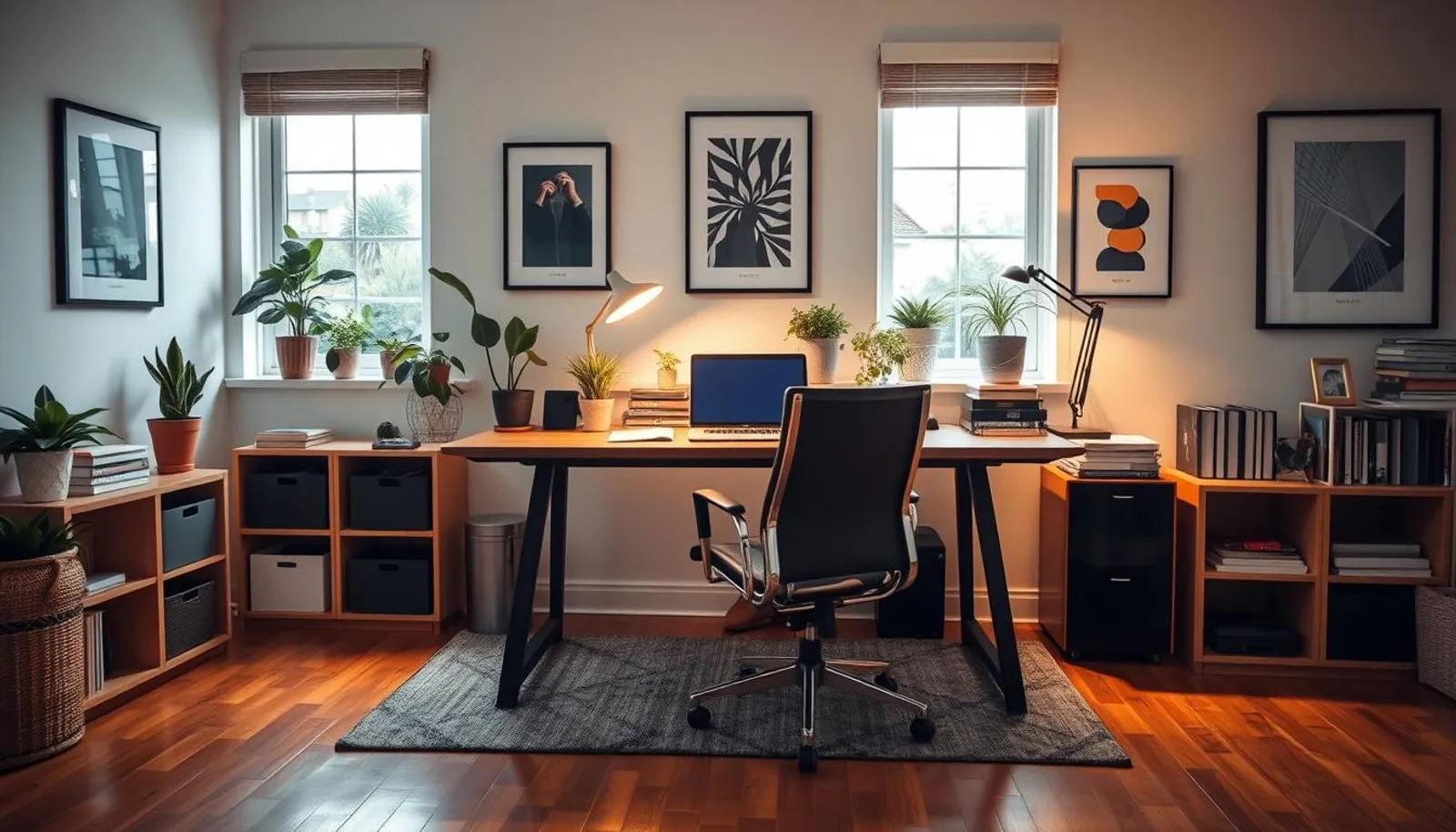

36 min read
Did you know that setting up a dedicated workspace can reduce interruptions and signal “at work,” increasing focus more than a casual corner ever will?
Working from home offers no commute and flexible hours, but it also demands boundaries. A productive home office begins with a clear decision: designate a specific spot that separates work from home life. This simple step helps you avoid distractions like the living room TV and tells household members when you’re on task.
Start with the basics and build out. Invest in essentials gradually — good seating, a proper desk height, and basic tech — then add tools that fit your workflow. For freelancers and remote employees alike, creating productive workspace means replacing office resources with thoughtful choices so your daily work quality improves.
Think of your setup as a strategic investment in long-term productivity and well‑being. Balance matters: design for comfort and professionalism, but be ready to tweak the layout and tools as your needs change. For more practical home office space tips, check this concise guide.
Key Takeaways
- Designate a specific workspace to reduce interruptions and boost focus.
- Begin with essentials and add ergonomic and tech upgrades over time.
- Creating productive workspace replaces office resources with smart choices.
- A productive home office is an investment in daily workflow and well‑being.
- Be ready to adjust layout and tools as needs evolve for best productivity practices.
essential tips home office
Working from home can blur the line between tasks and downtime. This short guide gives clear, practical steps for creating productive workspace that reduces distractions and supports daily routines. Use small, steady changes to upgrade comfort and efficiency without a full overhaul.
Why a focused guide matters for remote work
Remote work often slips into scattered habits. A focused guide helps you avoid common pitfalls by recommending reliable routines and layouts. It highlights choices that save time, such as dedicated zones and ergonomic furniture, so you can sustain work energy across the day.
Overview of productivity benefits from a well-designed home office
A proper setup improves concentration, output, and professional presence during video calls. Ergonomic chairs and correct desk height cut down on aches and fatigue. Good lighting and thoughtful organization reduce eye strain and mental clutter, so tasks get done faster.
How this guide uses proven strategies and research
This guide blends tested tips used by designers and remote professionals with practical adjustments people have adopted since remote work expanded. It covers layout, storage, tech setup, and behavior habits that support focus and health. For additional design ideas, review a practical roundup at essential home office design tips.
| Focus Area | Quick Action | Benefit |
|---|---|---|
| Location choice | Pick a spare room or a bright nook | Reduces interruptions and improves videoconference background |
| Ergonomics | Use adjustable chair and monitor riser | Prevents neck and back pain, boosts stamina |
| Lighting | Place desk near window; add task lamp | Improves mood and reduces eye strain |
| Storage | Install shelves and under-desk drawers | Keeps surfaces clear and workflow smooth |
| Tech & cables | Use docking station and cable sleeves | Less clutter, faster device swaps |
| Sound control | Try noise-canceling headphones or acoustic panels | Fewer interruptions, deeper focus |
Choose a designated workspace for better focus
Picking a single spot to work helps your brain switch into task mode. A designated workspace signals family or roommates that you are working. Avoid the bed, dining table, or sofa to cut down on blur between rest and work.
Benefits of a dedicated room or corner
A separate room with a door gives clear physical boundaries. That separation reduces interruptions and makes it easier to hold meetings without background noise or clutter. Even a corner with a proper desk and chair creates a reliable routine.
How physical boundaries help set work/life limits
Physical limits make it simpler to start and stop the workday. Closing a door or pulling a screen helps signal the end of work. This practice supports mental breaks and lowers stress when you switch back to home life.
Tips for carving a workspace in small homes or shared spaces
- Pick a low-traffic corner near a window for natural light when possible.
- Use room dividers, bookshelves, or curtains to create visual separation.
- Add noise-dampening rugs, wall panels, or noise-canceling headphones to cut distractions.
- Keep essential supplies in a single bin or drawer so the area stays functional and tidy.
- Schedule shared-space exclusivity with household members for key focus hours.
Follow these home office space tips to build consistency. Small upgrades and clear rules make creating productive workspace realistic, even in compact homes.
Invest in ergonomic furniture and accessories
Choosing the right equipment makes a big difference when creating productive workspace at home. Small changes prevent discomfort and help you focus longer. Think of this as part of adopting the best productivity practices for your day.
How chairs and adjustable desks improve posture and productivity
Ergonomic chairs with lumbar support and adjustable height reduce slouching and back strain. Studies show properly fitted seating can boost productivity by 15–20% because pain and fidgeting drop. Adjustable sit-stand desks let you change positions, lower fatigue, and raise energy across long work sessions.
Recommended accessories: keyboard, mouse, laptop stand, wrist rests
Separate keyboards and mice keep hands in a neutral position. Wrist rests and ergonomic mousepads cut wrist pressure and speed recovery during heavy typing. Laptop stands lift the screen to eye level so your neck stays neutral. Monitor arms help align dual screens for a clean sightline and less eye strain.
Cost versus long-term health and efficiency considerations
High-quality desks and chairs cost more up front, yet they lower the risk of chronic pain and reduce breaks for discomfort. That translates to sustained output and fewer medical bills. Balance budget and features: prioritize lumbar support, adjustability, and warranty when selecting pieces.
For hands-on guidance and product ideas that integrate with home design, visit S Cube ergonomic home office guide to explore tailored solutions for creating productive workspace.
| Item | Primary Benefit | Typical Feature | Value for Productivity |
|---|---|---|---|
| Ergonomic chair | Spine support and comfort | Adjustable lumbar, tilt, armrests | Reduces breaks for pain; improves focus |
| Sit-stand desk | Posture variation and circulation | Height adjustability, sturdy frame | Boosts energy; supports longer productive periods |
| Laptop stand / monitor arm | Proper screen alignment | Angle and height adjustment | Less neck strain; clearer visual workflow |
| Ergonomic keyboard & mouse | Neutral wrist position | Split layout, contoured shape | Faster typing with less fatigue |
| Wrist rest & footrest | Support for limbs | Memory foam or adjustable design | Reduces pressure points; improves comfort |
| Cable management & organizers | Tidy, distraction-free desk | Trays, clips, CPU holders | Cleaner space that supports best productivity practices |
Good lighting shapes mood and performance. Aim to bring daylight into your workspace where possible to boost alertness and comfort. Pair window access with smart lamp choices to keep energy steady through long workdays.
Productivity and mood benefits of daylight exposure
Natural light supports the body clock and raises alertness. Workers who get daylight report better mood and fewer afternoon slumps. For a natural light home office, schedule focused tasks during bright morning hours when possible.
Placement strategies to maximize natural light without glare
Position your desk so windows are to the side rather than directly behind or in front of the screen. Side-facing windows reduce glare while letting in full-spectrum daylight. If you must face a window, use sheer curtains or adjustable blinds to soften direct sun.
When light shifts during the day, rotate your setup or use an adjustable monitor hood to cut reflections. These home office space tips preserve view and brightness without sacrificing screen clarity.
Artificial lighting choices: desk lamps, LED color temperature, dimmers
Choose a task lamp with adjustable brightness and color temperature. Warm tones help evening winding down. Cooler, daylight-like LEDs boost focus for morning work. A dimmer gives control for varied tasks and eye comfort.
Avoid harsh overhead fluorescents. Use layered lighting: ambient overhead, task lamps for close work, and accent lights to reduce contrast. Follow best productivity practices by testing light levels during typical work hours and adjusting for comfort.
| Lighting Element | Why it matters | Practical tip |
|---|---|---|
| Window placement | Provides full-spectrum daylight and mood lift | Place desk side-on to reduce screen glare and use blinds for control |
| Task lamp | Focused light for reading and detailed work | Pick an adjustable LED lamp with 3000K–5000K range and dimmer |
| Ambient lighting | Reduces harsh contrasts across the room | Soften with warm bulbs or indirect fixtures for even glow |
| Color temperature | Influences alertness and relaxation | Use cooler tones for daytime focus, warmer tones for evenings |
| Glare control | Prevents eye strain and distractions | Use matte screens, monitor hoods, and adjustable blinds |
| Lighting adjustments | Matches light to task and time of day | Install dimmers or smart bulbs for quick changes |
Good technology removes friction. Start by assessing gaps in your setup and prioritize tools that match daily tasks. Small investments yield steady wins when creating productive workspace routines and preventing repeated interruptions.
Hardware is the foundation. Choose a reliable computer with enough RAM and SSD speed for your apps. Add dual monitors to boost multitasking and visual comfort. Replace an aging router and pick the fastest internet plan available to avoid lags and dropped calls. These moves help you upgrade tech stack without unnecessary extras.
Audio and video matter for professional presence. Use an external microphone for clearer speech, a wide-angle camera for group calls, and quality speakers or headphones. Check compatibility between camera, mic, and conferencing apps before buying. Clear sound and sharp video signal respect for colleagues and clients while creating productive workspace experiences.
Software choices speed collaboration. Cloud tools like Google Workspace or Microsoft 365 keep files synced. Project apps such as Asana or Trello reduce manual tracking. Consider AI-powered assistants to automate repetitive tasks and fintech tools that streamline invoicing. Keep apps and drivers updated to maintain stability and security as you upgrade tech stack.
Stock your desk with role-specific gear. A designer needs color-accurate displays. A developer benefits from extra RAM and multiple virtual desktops. Regularly test device compatibility, update firmware, and maintain backups. These habits fit essential tips home office best practices and protect your workflow from surprise failures.
Budget for long-term value. Prioritize connectivity, audiovisual clarity, and a dependable computer before expensive extras. Small upgrades spaced over time keep costs manageable and ensure each purchase improves productivity in measurable ways.
Declutter and organize to reduce cognitive load
Clutter steals time and focus. Start by removing items you don’t use daily and keep essentials within arm’s reach. This simple step helps you declutter home office areas so mental energy goes to work, not to hunting for tools or notes.
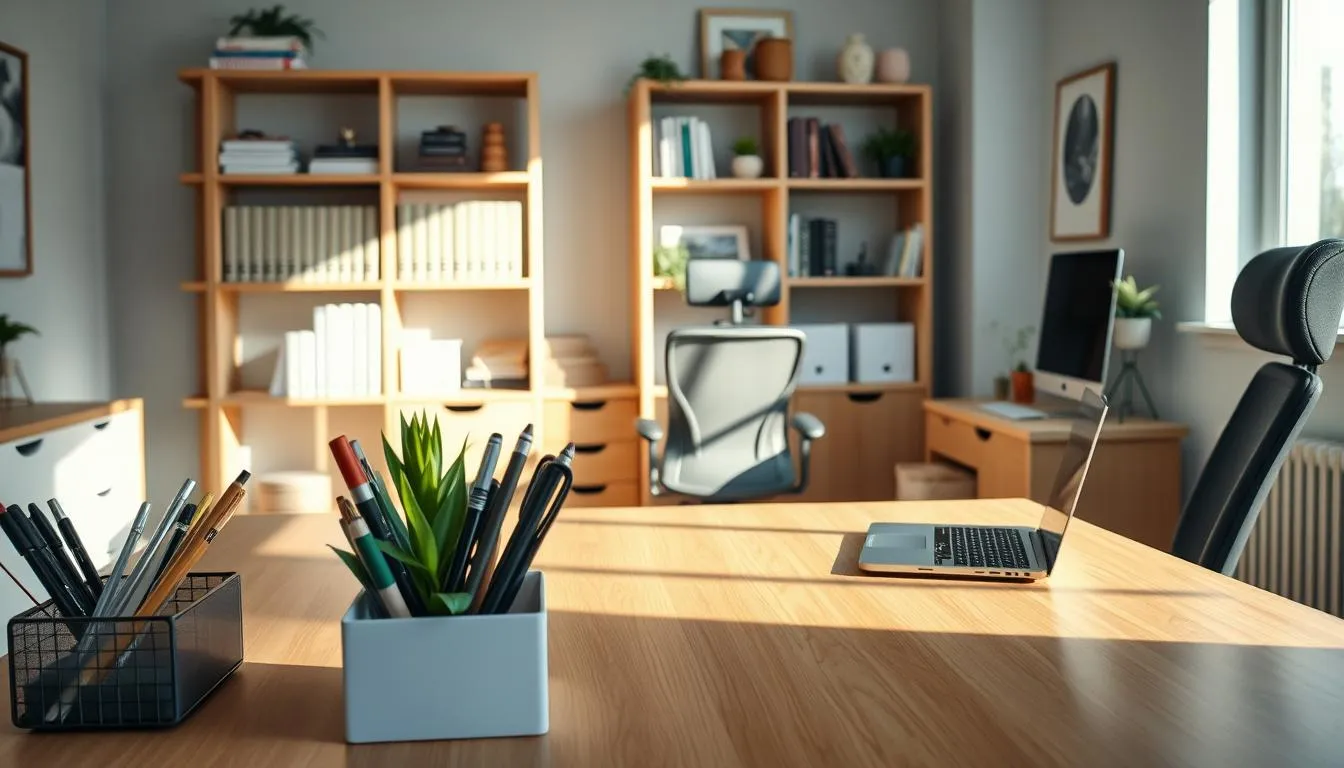
Physical organization systems
Use drawers, shelves, and vertical storage to free desk space. A small set of labeled baskets or clear bins on a bookshelf makes supplies easy to find. Whiteboards or wall planners replace scattered sticky notes and keep action items visible without adding mess.
Bookshelves work well against unused walls. Combine narrow shelves with stackable drawers to maximize vertical space in compact rooms. The result is a tidy area that supports creating productive workspace habits.
Digital declutter
File structures should be simple and consistent. Create main folders for projects, add dated subfolders for versions, and archive completed work. Set inbox rules to filter newsletters and receipts into folders so your priority messages stay visible.
Schedule weekly backups and clear old files to prevent slow search times. A clean digital environment mirrors physical order and helps you follow home office space tips that reduce friction during busy days.
Cable management tactics
Cords contribute to visual noise and slow cleaning. Use cable ties, cord covers, and a small under-desk tray to keep power strips off the floor. Label chargers for devices so swaps are quick and painless.
Group cables by device and route them along one path to the outlet. When cables are out of sight, your workspace feels calmer and supports sustained focus.
Combine physical and digital housekeeping into a weekly reset. Stow supplies when not in use, clear your desktop, run backups, and check inbox rules. These habits make it easier to declutter home office setups, apply practical home office space tips, and keep creating productive workspace routines day after day.
Decrease distractions and manage interruptions
Small changes to your space and schedule can greatly decrease distractions. A dedicated corner or room, a door you can close, and clear visual cues tell family and roommates when you need quiet. Choose locations away from street noise and TVs to protect focus time.
Sound control matters. Use noise-canceling headphones from Bose or Sony when traffic or neighbors intrude. Add soft furnishings, rugs, or a compact sound-dampening panel to cut echo and lower interruptions. A white-noise machine can mask sudden household sounds.
Set household boundaries with short, actionable rules. Post your work hours on a shared Google Calendar and ask household members to check it before planning calls. Communicate expectations for meetings and quiet windows so others know when you are not to be disturbed.
Protect focus with workflow techniques proven in best productivity practices. Time blocking creates predictable stretches for deep work. Try the Pomodoro method: 25 minutes of focus, 5 minutes of break, to limit context switching. Track how often you are pulled away—research shows it can take about 23 minutes to refocus after an interruption—so fewer interruptions multiply your effective work time.
Control digital noise. Snooze smartphone notifications, pause Slack alerts, and close social tabs. Use site blockers such as Freedom or StayFocused when tasks require uninterrupted attention. Let your team know your focus blocks so they can plan asynchronous updates.
When home is too distracting, a short change of scene helps. Reserve a day at a local coworking space like WeWork or a nearby library when deep work is essential. Alternate locations when kids, pets, or renovations make your home setup unstable.
Be realistic and adaptive. Some interruptions are unavoidable. Build brief recovery rituals: jot a quick note about your task before answering, then resume with a timer. These routines support the essential tips home office readers need to keep momentum and apply the best productivity practices consistently.
For a compact guide to practical steps and scheduling ideas, see this helpful resource on how to limit distractions and interruptions to improve remote work: limit distractions and interruptions.
Optimize ergonomics with posture and movement habits
Good posture and small movement habits make a big difference for comfort and focus. Start by setting up your monitor so the top of the screen sits at eye level. Keep forearms parallel to the floor and feet supported to avoid strain. These adjustments help optimize ergonomics and support longer, productive work sessions.
Proper monitor height, arm position, and foot support
Position your monitor about an arm’s length away. Tilt the screen slightly to reduce glare and keep your neck neutral. Use a keyboard and mouse at a height that lets your wrists stay straight. Add a footrest if your feet do not sit flat on the floor. Small accessories such as a wrist rest or lumbar cushion reduce discomfort and keep you aligned with best productivity practices.
Benefits of sit-stand desks and schedule for standing breaks
Sit-stand desks lower the risks linked to long periods of sitting and can boost energy. Alternate between sitting and standing every 30 to 60 minutes to prevent fatigue. Create a simple schedule: 45 minutes seated, 15 minutes standing, or use a gentle timer to prompt changes. This approach supports creating productive workspace and reduces back and neck tension.
Quick stretches and movement routines to prevent fatigue
Take brief movement breaks to reset your body and mind. Try shoulder rolls, neck turns, and calf raises for one to two minutes each hour. Add a short walk or gentle hip flexor stretch during longer breaks. These habits prevent stiffness, cut down on physical distractions, and keep you aligned with the best productivity practices.
| Focus Area | Action | When to Do It |
|---|---|---|
| Monitor and Screen | Top of screen at eye level; 20–30° tilt | At setup and after any desk change |
| Arm and Wrist Position | Forearms parallel to floor; wrist rest if needed | Throughout the workday |
| Foot Support | Feet flat or on a footrest; knees ~90° | At setup; adjust for chair changes |
| Sit-Stand Routine | Alternate sitting and standing every 30–60 minutes | Use timer or calendar reminders |
| Microbreaks and Stretches | 1–2 minute stretches hourly; 5–10 minute walks every 2 hours | Hourly and mid-morning/afternoon |
Make your office a place that feels like you and supports long hours of focused work. Start by choosing colors, textures, and objects that lift your mood without crowding the desk. Thoughtful design promotes comfort and sparks motivation during slow afternoons.
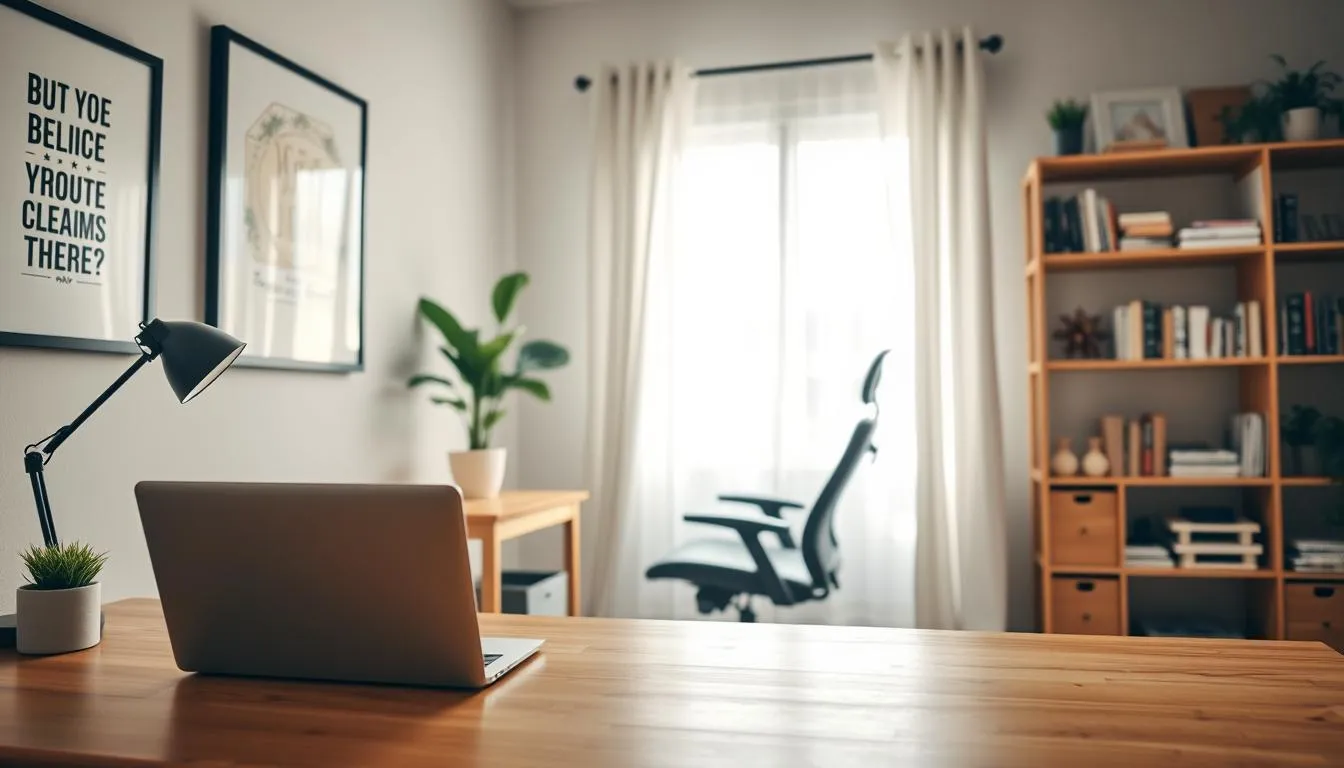
Match decor to your role. Creatives may add bold art and colorful accents. Analysts and writers often prefer a calmer, minimalist backdrop. This balance between personality and purpose is one of the most effective home office space tips for sustainable focus.
Keep a professional frame for video calls while preserving warmth. A simple shelf with a plant, a framed print, and a lamp reads well on camera. These choices support creating productive workspace habits and present a tidy, confident image.
Plants improve air and mood. Low-maintenance options like pothos, snake plant, and ZZ plant add greenery with little fuss. Pair them with soft textiles and warm lighting to foster calm without sacrificing productivity.
Stock supplies where you can reach them. Use drawers, trays, and a small caddy to keep pens, chargers, and sticky notes organized. Smart organization complements design comfort motivation and reduces friction when you work.
Use color to cue tasks. Keep a muted palette near your screen for deep focus. Add a bright accent zone for brainstorming or breaks. This simple tactic is a practical home office space tip that helps the brain switch gears.
Choose one meaningful art piece rather than many small items. One strong image supports creativity and focus without visual clutter. That choice helps in creating productive workspace environments that feel curated and calm.
Set a comfort checklist: proper chair support, a soft throw for chilly days, a footrest if needed, and a clear camera backdrop. These small additions raise daily comfort and keep motivation steady during long projects.
| Element | Quick Benefit | Practical Example |
|---|---|---|
| Plants | Boost mood and air quality | Pothos on a shelf, snake plant near window |
| Color accents | Stimulate creativity or calm | Blue wall art for focus, yellow cushion for energy |
| Professional backdrop | Good impression on video calls | Neat shelf with one framed print and a lamp |
| Accessible supplies | Reduces interruptions | Desk caddy, labeled drawers, cable clips |
| Comfort items | Supports long work sessions | Ergonomic chair, footrest, soft throw |
Clear rituals make the day predictable. A few simple habits at the start and end of work help your brain switch modes. Treat the workspace as a deliberate investment in lasting habits. These small choices support routine work life boundaries and reinforce the best productivity practices over time.
Start-of-day rituals set tone and focus. Try a short checklist: review top priorities, open only the apps you need, and set a two-hour deep work block. A consistent morning routine signals your brain that work has begun and aligns with essential tips home office planning.
End-of-day rituals close the loop. Save notes for tomorrow, power down nonessential devices, and step away from the desk. A firm closing routine protects personal time and keeps routine work life boundaries intact.
Time management matters more than fancy tools. Use a clear schedule with fixed start and end times. Build regular breaks into the day and set an alarm for your final shutdown. This structure reflects best productivity practices and reduces the risk of burnout.
When home routines slip, consider alternate spaces. Coworking centers, libraries, or a café can restore focus and social contact. Changing location offers a reset for habits and supports essential tips home office by preventing isolation.
Mix predictable rituals with occasional tweaks. Keep track of what works, then refine your schedule. A steady approach to routines and boundaries promotes long-term focus and the best productivity practices for remote work.
Improve air quality, temperature, and ventilation
A calm, well-ventilated room helps focus and reduces fatigue. Small changes to air quality home office setups can make long workdays feel easier. Place your desk where you get steady airflow and daylight to support alertness without glare.
How indoor climate affects concentration and health
Temperature swings and stale air lower productivity and raise distraction. Poor indoor air can trigger headaches, allergies, and drowsiness that break concentration. Maintaining a steady, comfortable temperature keeps cognitive performance steady through the afternoon slump.
Practical steps: air purifiers, fans, humidifiers, near-window placement
Start with simple tools. A HEPA air purifier removes dust and pollen. A box fan or oscillating fan boosts circulation when windows stay closed. Use a humidifier in dry winter months to protect mucous membranes and reduce static on electronics.
Pick low-VOC paints and cleaners to limit chemical loads. For further guidance on strategies, review this concise resource on improving indoor air: indoor air quality strategies. These tips pair well with home office space tips like placing healthy plants near your workspace.
Maintaining a comfortable temperature for sustained focus
Keep room temperature between about 68°F and 72°F for most people. Use a programmable thermostat to align warmth with your schedule. A cool room in the morning and slight warmth in late afternoon help maintain energy and reduce distractions.
Combine temperature control with air movement and routine maintenance. Change HVAC filters on schedule and vacuum with a HEPA-equipped cleaner to cut allergens. These measures fit naturally into creating productive workspace plans and make your home office healthier and more efficient.
Use lighting and screen protection to reduce eye strain
Good lighting and smart screen habits make a big difference when creating productive workspace at home. This short guide covers practical choices you can apply today to reduce eye strain and keep energy up during long workdays.
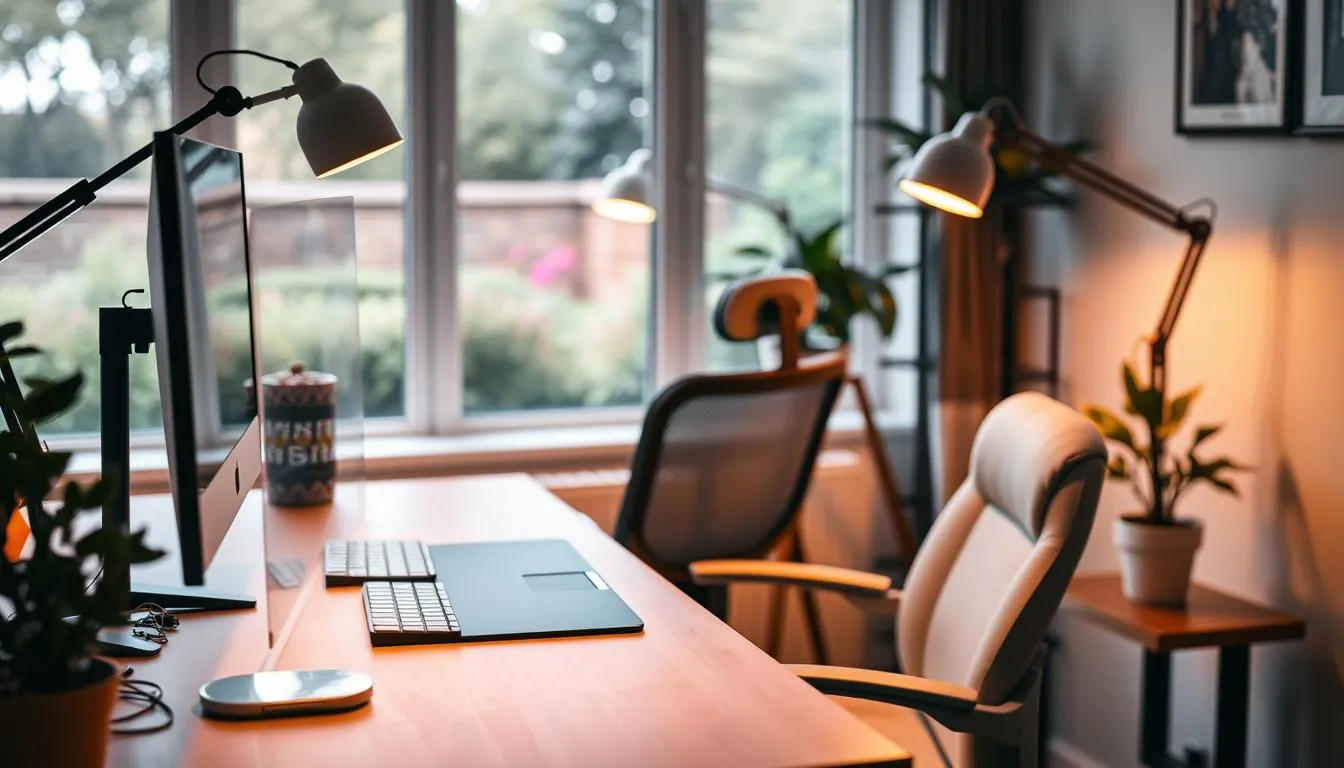
Blue-light blocking glasses and screen filters block short-wavelength light that can cause headaches and disrupt sleep. Brands like Warby Parker and Gunnar offer styles that fit office wear. Many users find combining a physical filter with software night modes lowers glare and eye fatigue.
Adjusting screen brightness and contrast to match ambient light prevents your eyes from working too hard. Aim for screen brightness close to room brightness, increase contrast for tiny text, and avoid facing windows that create glare. LED bulbs that mimic daylight produce steady, flicker-free illumination for evening tasks.
Build simple eye-care habits into each work session. Try the 20-20-20 rule: every 20 minutes, look at something 20 feet away for 20 seconds. Add short blink breaks and occasional longer pauses to stand and stretch. These small steps help reduce eye strain and support long-term comfort.
Use task lighting that you can angle, so it lights paperwork without reflecting on your monitor. A dimmable desk lamp gives control for late hours. Pair this with screen protection tools such as matte filters or apps that warm color temperature after sunset to cut blue light exposure.
Follow these essential tips home office builders use to lower visual fatigue: set up adjustable lamps, balance ambient and task light, fine-tune display settings, and schedule regular micro-breaks. These habits help maintain focus, prevent headaches, and support a healthier daily rhythm while creating productive workspace at home.
Storage solutions and systems for ongoing organization
Smart storage keeps your home office clear and your mind calm. Use baskets, labeled drawers, and vertical shelving to corral supplies, chargers, and paperwork. Visual tools such as wall planners or a whiteboard cut down on sticky-note clutter and make tasks easy to scan.
Labeling, baskets, and drawer organizers for small items
Group items by function and label each container. Clear bins or woven baskets work well on open shelves. Drawer dividers keep pens, sticky notes, and cables separate so you grab what you need fast.
Keep daily essentials within arm’s reach. Store less-used items in labeled boxes on higher shelves. This mix of accessibility and order supports creating productive workspace habits.
Vertical storage and shelving to maximize small spaces
Fit taller shelving units or floating shelves above your desk to use wall space. Bookshelves with bins give a neat look and free up desktop area for focused work.
Mount a pegboard or slim file rack and clip cords into cable management sleeves. A tidy background reads professional on video calls and reinforces home office space tips that matter for small rooms.
Creating a weekly reset routine to keep clutter at bay
Set a short weekly reset: clear the desktop, sort incoming papers, wipe surfaces, and relabel any overflowing containers. Ten to fifteen minutes keeps mess from piling up.
Pair physical tidying with a quick digital sweep: archive old files and empty the downloads folder. Regular check-ins make storage solutions home office systems sustainable and strengthen your rhythm for creating productive workspace.
| Task | Tool | Time |
|---|---|---|
| Daily tidy | Small basket for loose items | 5 minutes |
| Weekly reset | Drawer organizers, labels, whiteboard | 10–15 minutes |
| Monthly deep sort | Vertical shelving, archive boxes | 30–45 minutes |
| Cable management | Sleeves, clips, under-desk tray | 15–20 minutes |
Creating a safe digital workspace ranks with lighting and ergonomics when building a reliable home office. Strong connectivity and layered defenses keep video calls steady and client data protected. Treat security home office setup as part of your daily routine to avoid interruptions and breaches.
Importance of strong Wi-Fi, VPNs, and updated software
Start with a robust router and a passworded network. A stable connection prevents meeting lags and lost work. Use a reputable VPN for public Wi‑Fi or when handling sensitive files to protect privacy and meet corporate policies.
Keep operating systems and apps current. Patches from Microsoft, Apple, Google, and major SaaS providers close security holes that attackers exploit. Regular updates support the essential tips home office checklist and help maintain best productivity practices.
Automated backups and version control for critical files
Automate backups to cloud services like Google Drive, Microsoft OneDrive, or Dropbox for continuous protection. Schedule nightly syncs and keep a secondary external drive for redundancy. Version control prevents accidental overwrites during edits and restores earlier drafts when needed.
Adopt a simple folder naming and timestamp routine. This small habit reduces recovery time after corruption or accidental deletions. Backups preserve focus and feed into the best productivity practices by minimizing downtime.
Password managers and basic endpoint security practices
Use a password manager such as 1Password, LastPass, or Bitwarden to generate and store strong credentials. Unique passwords plus two-factor authentication stop credential reuse from becoming a major risk.
Run reputable antivirus and enable built-in firewalls on Windows and macOS. Lock screens when away, encrypt sensitive drives with BitLocker or FileVault, and limit admin accounts to reduce attack surface. These essential tips home office steps protect devices and data without adding complexity.
Small, regular habits—updating software, testing backups, and reviewing access—keep a home office secure and productive. Treat security home office measures as ongoing maintenance that supports reliable work and the best productivity practices.
Measure productivity and refine your setup
Small, steady changes help you learn what works. Start with basic adjustments and track how each change affects comfort, interruptions, and task flow. Use simple measures to see if your choices support focus and output.
Key metrics and signals that your office supports focus
Watch task completion rate, focus duration, interruption count, and self-reported energy. These metrics show whether your environment helps sustained work. Note when you feel alert and when tasks stall.
How to A/B test changes for performance
Compare one variable at a time: lighting levels, desk layout, or keyboard choice. Run each version for a week and log outcomes. Change only one factor per test to isolate its effect.
Using apps and journals to track energy, focus, and interruptions
Combine a simple journal with apps like RescueTime or Toggl to gather objective and subjective data. Record start and end times, distraction triggers, and energy peaks. Review weekly to refine your setup.
Below is a compact comparison to help you A/B test and measure results. Use it to capture quick before-and-after snapshots that guide iterative improvements in creating productive workspace and applying best productivity practices.
| Test Variable | Measurement | Tool | Success Signal |
|---|---|---|---|
| Lighting (natural vs. warm LED) | Average focus span; glare incidents | Focus journal + smartphone timer | Longer focus spans; fewer breaks |
| Layout (facing window vs. back to wall) | Task completion rate; interruption frequency | Toggl sessions + interruption log | Higher completion rate; lower interruptions |
| Input devices (mechanical vs. membrane keyboard) | Typing comfort; error rate | Typing tests + comfort rating | Improved comfort; fewer errors |
| Seating (ergonomic chair vs. standard) | Perceived energy; back discomfort | Daily journal + posture check | Higher energy; less discomfort |
| Noise management (noise-canceling vs. none) | Concentration score; call clarity | RescueTime + call feedback | Higher concentration; clearer calls |
Conclusion
Setting up a productive home office is an investment in yourself. Start with the essentials—location, lighting, ergonomic furniture, and reliable tech—and scale improvements over time. These essential tips home office help reduce distractions and boost focus so you can do your best work from home.
A carefully planned space supports professionalism and well-being. Balance focused days at your desk with occasional coworking or off-site meetings to avoid isolation and maintain healthy boundaries. Use creating productive workspace strategies like routine, decluttering, and movement breaks to keep energy steady.
Comfort, good light, and the right equipment form the core of a lasting setup. Apply home office space tips and best productivity practices to test small changes, track what works, and refine your layout and tools. For a concise guide to practical steps and upgrades, see this resource on creating a productive workspace: creating a productive workspace.
FAQ
What are the essential first steps to create a productive home office?
Start by choosing a single, dedicated spot for work—a room or a corner—so household members know when you’re “at work.” Prioritize basics: a stable desk, a supportive chair, reliable internet, and task lighting. Keep the area free of nonwork items and add features incrementally, testing what improves focus and comfort over time.
Why does a focused guide matter for remote work?
Remote work easily drifts into distraction without deliberate setup. A focused guide collects proven strategies—dedicated zones, ergonomic choices, lighting, and routines—that help both new and experienced remote workers reduce interruptions, protect time, and increase efficiency and well-being.
How does a well-designed home office improve productivity?
A thoughtful office boosts concentration, reduces physical strain, and supports professional output. Ergonomic furniture and proper lighting decrease discomfort and fatigue, while organized tech and storage streamline workflows. Over time these changes raise task completion rates and overall work quality.
How should I choose a designated workspace for better focus?
Pick a low-traffic, quiet area—ideally with a door and a window for natural light. If space is limited, create physical boundaries using room dividers, shelving, or a consistent schedule that signals exclusivity. The key is consistency: using the same spot helps your brain shift into work mode.
What are practical tips for carving a workspace in small or shared homes?
Use vertical storage and compact desks, place your setup in a corner or alcove, and use noise-dampening mats or curtains. Establish household agreements about quiet times, and schedule blocks when the shared area is yours. Mobile setups on a dedicated cart can also be stowed when not in use.
How do ergonomic chairs and adjustable desks improve posture and productivity?
Ergonomic chairs with lumbar support and adjustable height reduce slouching and back strain, which cuts physical distraction. Sit-stand desks let you alternate positions, boosting energy and circulation. Together they enable longer, more comfortable work sessions and fewer breaks for discomfort.
Which accessories should I add for better ergonomics?
Use an external keyboard and mouse, a laptop stand or monitor riser to keep screens at eye level, wrist rests, and a footrest if needed. These accessories align your wrists, arms, and neck to prevent repetitive strain and maintain correct posture throughout the day.
Is ergonomic furniture worth the investment?
Yes. While initial costs vary, ergonomic furniture reduces pain and fatigue and supports sustained productivity. Consider cost versus long-term health benefits—quality seating and adjustable desks often pay back through fewer discomfort-related interruptions and higher output.
Why is natural light important for a home office?
Daylight increases alertness, improves mood, and helps regulate circadian rhythms. Workspaces near windows tend to reduce fatigue and boost energy, which supports concentration and creative thinking throughout the day.
How can I place my desk to maximize natural light without causing screen glare?
Position the desk so the window is to the side of your screen rather than directly behind or in front. If side placement isn’t possible, use blinds or sheer curtains to diffuse direct sunlight and reduce glare while keeping the benefits of daylight.
What artificial lighting should I use for evening or low-light work?
Choose adjustable LED task lamps with color temperatures that mimic daylight (around 5000K) for focused tasks, and use dimmers to control brightness. Avoid harsh fluorescent lights and use layered lighting—ambient plus task illumination—to reduce eye strain.
What tech is essential for a smooth home-office workflow?
A reliable computer, high-speed internet and router, and at least one external monitor improve multitasking. Keep software updated and use cloud collaboration tools, automated backups, and a password manager. For many roles, dual monitors and a fast internet plan are game changers.
What audio and video gear should I prioritize for professional calls?
Invest in a quality external microphone or USB headset and a camera with a wide-enough angle for clear video. Good speakers or headphones and an upgraded internet plan reduce lag and ensure your audio and video are professional during meetings.
Which software and cloud tools help streamline collaboration?
Use cloud storage (Google Drive, OneDrive, Dropbox), collaboration platforms (Microsoft Teams, Slack), calendar sharing, and project-management apps (Asana, Trello). Automate backups and keep plugins and drivers updated for consistent compatibility.
How do I declutter to reduce cognitive load?
Keep only essentials within arm’s reach and store the rest in labeled drawers, baskets, or vertical shelving. Use cord organizers for cables and replace scattered sticky notes with a whiteboard or wall planner. Regularly clear surfaces to maintain a clean, focused workspace.
What digital organization practices prevent information clutter?
Create consistent folder structures, use inbox rules and filters, schedule regular backups, and implement version control for important files. A weekly digital tidy-up prevents lost documents and reduces time spent searching for information.
How can I manage interruptions and household distractions?
Choose a quiet location, use a door or visual signal when you’re working, and communicate your schedule to family or roommates. Noise-canceling headphones, sound-dampening materials, and time-blocking techniques help protect deep-focus periods.
What workflow techniques help sustain focus at home?
Time blocking, the Pomodoro technique, and scheduled deep-work sessions reduce task-switching. Create start-of-day and end-of-day rituals to mark boundaries, and use calendar blocks to reserve uninterrupted work periods.
How should I set up monitor height, desk depth, and arm position for good posture?
Place the top of the monitor at or slightly below eye level, about an arm’s length away. Keep elbows at roughly 90 degrees with forearms parallel to the desk. Feet should rest flat or on a footrest, and wrists should be neutral while typing.
How often should I alternate between sitting and standing?
Aim to change position every 30–60 minutes. Use a sit-stand schedule—45 minutes sitting, 15 minutes standing, or a pattern that fits your comfort. Short standing intervals and light movement break up prolonged sitting and boost circulation.
What quick stretches and movement routines prevent fatigue?
Do short neck rolls, shoulder shrugs, wrist stretches, and standing leg curls every 20–30 minutes. Walk for a few minutes each hour and follow the 20-20-20 rule for eye relief: every 20 minutes, look at something 20 feet away for 20 seconds.
How can I personalize my office without losing professionalism for video calls?
Add plants, calming artwork, and color accents that inspire you, but keep the camera background tidy and uncluttered. Use a simple, attractive shelf or a neutral backdrop for calls to balance personality with a professional appearance.
What decor choices boost creativity and calm?
Choose colors and items that fit your work—greens and blues for calm, pops of warm color for creative energy. Live plants improve air quality and mood, while meaningful art or vision boards can keep motivation high.
How do routines and rituals separate work from home life?
Start-of-day rituals like brewing coffee, reviewing a short plan, and a quick desk setup signal the beginning of work. End-of-day rituals—shutting down the computer, a short tidy, and a walk—create closure and prevent overwork.
When should I consider coworking or alternate spaces?
Use coworking when home isolation reduces productivity, when you need in-person collaboration, or to re-establish routine. Alternate spaces can restore social contact and structure if you struggle with boundaries at home.
How does indoor climate affect concentration and health?
Poor air quality, uncomfortable temperature, and low ventilation increase fatigue and reduce focus. Good airflow and a comfortable ambient temperature support alertness and long-term well-being.
What practical steps improve air quality and ventilation?
Place your desk near a window for fresh air, use fans for circulation, and consider air purifiers or humidifiers if needed. Opening windows periodically and keeping plants that improve air quality help maintain a healthier environment.
How do blue-light glasses and screen filters help with eye strain?
Blue-light-blocking glasses reduce exposure that can disrupt sleep and cause headaches during long evening sessions. Screen filters or night-mode settings lower harsh blue wavelengths and, combined with proper lighting, reduce eye fatigue.
What are optimal screen brightness and contrast settings?
Match screen brightness to ambient light—bright rooms need higher brightness, dim rooms lower. Adjust contrast for clear text, and use night mode or warmer color settings in the evening to minimize circadian disruption.
What storage systems work best for ongoing organization?
Use labeled baskets, drawer organizers, vertical shelving, and closed cabinets for a mix of easy access and neatness. Reserve surface space for daily essentials and keep less-used items out of sight to maintain a calm workspace.
How do I keep clutter from creeping back in?
Schedule a weekly reset: clear surfaces, put supplies away, update digital folders, and test cables and tech. Regular small maintenance sessions prevent clutter accumulation and preserve focus.
What digital security and backup measures are essential for home offices?
Use strong Wi‑Fi with a secure router, enable a VPN for sensitive work, keep systems and apps updated, and use password managers. Automate backups to cloud storage or external drives and run basic endpoint security like antivirus and firewalls.
How often should I back up critical files?
Back up important work daily or use continuous cloud-sync services. Keep a secondary, offline backup weekly for irreplaceable data and verify restore procedures periodically.
What productivity metrics can show my home office is working?
Track task completion rates, uninterrupted focus duration, the number of daily interruptions, and perceived energy levels. Improvements in these signals suggest the space supports productivity and well-being.
How can I A/B test changes like lighting or layout?
Change one variable at a time (lighting, desk position, tools) for a set period and record outcomes: focus length, productivity, discomfort, and interruptions. Compare results and keep what measurably improves performance.
What tools help track energy, focus, and interruptions?
Use simple journals, focus-tracking apps (Forest, Focus@Will), time trackers, or AI-driven productivity tools to log sessions and interruptions. Regular reviews help refine what works and what needs adjustment.