
Transform Your Workspace with These Innovative Lighting Solutions
Enhance your workspace
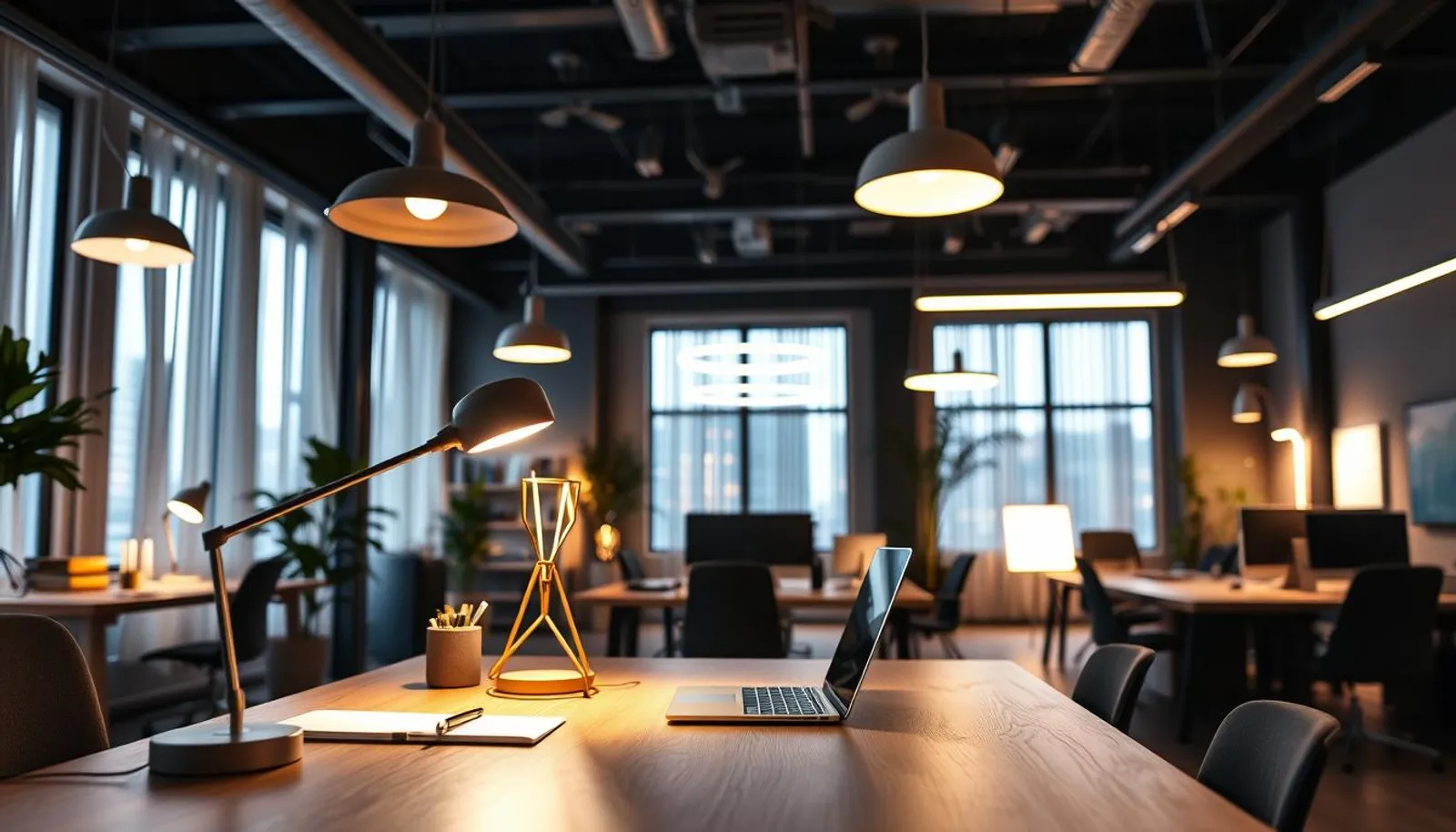

24 min read
80% of office workers say better lighting would improve their focusan eye-opening stat that shows how much power lighting holds over daily performance. Creative office lighting is no longer an afterthought; it shapes mood, productivity, and brand perception in tangible ways.
Modern workspace lighting solutions blend layered strategiesambient, task, and accentwith smart controls and energyefficient LEDs. From adjustablearm desk lamps to slim linear profiles and large sculptural pendants, innovative office lighting now supports circadian rhythms, reduces eye strain, and lowers operational costs.
These lighting ideas for productivity also prioritize natural light, modular flexibility, and sustainable materials. Whether you’re refreshing a coworking floor or specifying fixtures for a headquarters, practical choices like undercabinet task strips, acoustic luminaires, and colortunable LEDs make measurable differences.
For real-world product options and installation tips, see this practical guide on transforming office lighting for modern workspaces: workspace lighting guide.
Key Takeaways
- Layered lightingambient, task, accentcreates comfort and clarity.
- Smart systems and tunable LEDs support focus and circadian health.
- Linear fixtures and modular designs offer even light and flexibility.
- Undercabinet and adjustable desk lamps reduce glare and eye strain.
- Sustainable materials and efficient LEDs cut costs and align with brand values.
Why Lighting Matters for Productivity and WellBeing
Good lighting does more than brighten a room. It shapes attention, energy, and mood. Thoughtful choices in creative office lighting and workspace lighting solutions help teams stay focused while reducing eye strain and fatigue.
Effects of light on focus and fatigue
Bright, well-directed light supports concentration for detail work. Cool white tones around 5000K6500K boost alertness for tasks that require vigilance. Warmer tones relax people during breaks and informal meetings.
Proper task lighting reduces glare on screens and limits squinting. Small improvements at desks and meeting tables cut errors and improve throughput.
Circadianfriendly lighting and its role in workplace health
Human-centric systems that change brightness and color through the day reinforce natural rhythms. Circadian-friendly lighting that mimics daylight cycles can help employees sleep better and feel less stressed.
Where windows are limited, tunable LEDs and automated schedules recreate morning, midday, and evening cues. These adjustments improve alertness during work hours and recovery after work.
Lighting as a reflection of brand and company culture
Lighting choices communicate values. Sustainable fixtures and energy-smart controls signal environmental commitment. Bold pendants and sculptural luminaires express an innovative, design-forward identity.
Integrating lighting ideas for productivity with creative office lighting reinforces brand purpose while giving staff the visual cues they need to perform at their best.
creative office lighting: Inspiring Design Trends for Modern Workspaces
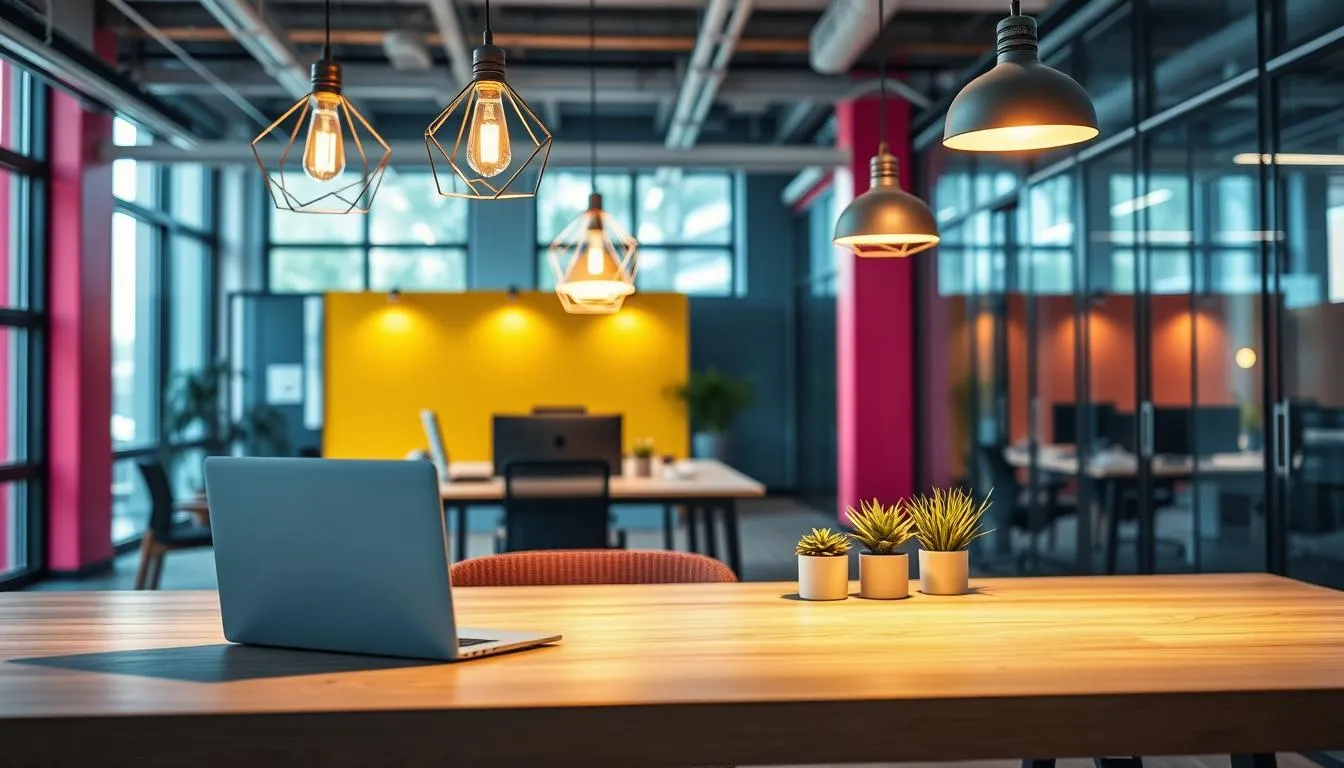
Designers are blending daylight and electric light to shape healthier, more engaging offices. Biophilic and natural light integration places desks near windows, uses glass partitions, and pairs fixtures that mimic daylight cycles to support wellbeing. These moves form a backbone for contemporary workspace lighting solutions and align with smart, humancentric design.
Statement pendants and sculptural fixtures serve as brand signposts in lobbies and collaboration zones. A bold pendant can anchor a reception area while a crafted chandelier adds warmth in a lounge. Thoughtful selection avoids clutter and keeps focus on brand character and user comfort, matching current office lighting trends.
Minimalist linear profiles and recessed architectural lighting provide clean, even illumination for open plans. Slim linear systems deliver uniform light across workstations while recessed strips emphasize ceiling geometry. Combining diffusers and tunable color temperature reduces glare and supports lighting ideas for productivity without visual distraction.
Mixing these approaches creates layered solutions that respond to activity and mood. For flexible areas, pair sculptural pendants with narrow linear fixtures and daylight sensors for smooth transitions. That blend keeps energy use low and makes lighting feel intentional rather than incidental.
For indepth examples of how design and technology converge, review practical installations and product ideas at modern office lighting trends. These case studies show how to apply creative office lighting and workspace lighting solutions to raise comfort and performance.
Layered Lighting Strategy: Ambient, Task, and Accent
Layered lighting makes workplaces flexible and human-centered. Start with soft ambient light to set an even base. Add targeted task fixtures for focused work. Finish with accent pieces to bring architecture and artwork to life.
How to balance ambient overhead light with targeted task illumination
Begin by choosing ambient fixtures that diffuse light and remove harsh shadows. Recessed linear runs, pendant clusters, or indirect cove lighting create uniform illumination without glare. Pair those with adjustable task lamps or under-shelf strips so each person can fine-tune brightness.
When selecting fixtures, consider modular systems that let you reconfigure layouts as teams change. This approach to workspace lighting solutions keeps installation flexible and cost-effective.
Accent lighting to highlight architecture, artwork, and collaborative zones
Use accent lighting to add depth and guide movement through a space. Spotlights and directional pendants can emphasize textured walls, branded displays, and wayfinding elements. Clusters of sculptural pendants work well over lounge areas to make collaboration feel intentional and inviting.
For inspiration and product choices that blend craft with performance, see curated examples at layered commercial lighting strategies, which show ambient, accent, and task fixtures in real installations.
Design tips for avoiding glare and screen reflections
Position task lights so beams miss monitor surfaces. Choose diffusers, louvers, and linear fixtures with shields to cut direct glare. Under-cabinet strips and angled fixtures control spill light while keeping screens readable.
Dimming controls, color-temperature consistency, and adjustable arms are practical tools when implementing lighting ideas for productivity. They let occupants tailor conditions and reduce visual fatigue.
| Layer | Purpose | Fixture Examples | Design Tips |
|---|---|---|---|
| --- | --- | --- | --- |
| Ambient | Provide even, comfortable base illumination for the whole room | Recessed linear, indirect cove, soft pendant arrays | Use diffusers, consistent color temperature, even spacing |
| Task | Deliver precise light for desks, meeting tables, and reading zones | Adjustable-arm desk lamps, under-shelf strips, directional pendants | Choose the best desk lighting options with adjustable output and shields |
| Accent | Highlight art, architecture, and collaboration nodes for visual interest | Spotlights, track heads, sculptural pendant clusters | Use narrow beams, aim for contrast, cluster pendants for focal areas |
| Controls & Integration | Enable personalization, save energy, and support circadian routines | Dimmers, zoned controls, occupancy sensors, daylight harvesting | Implement zoning and presets for common activities and tasks |
Best Desk Lighting Options for Focused Work
Good desk lighting makes tasks easier and keeps energy up. Choose fixtures that let you control placement, brightness, and color temperature. These workspace lighting solutions help reduce eye strain and keep surfaces uncluttered.
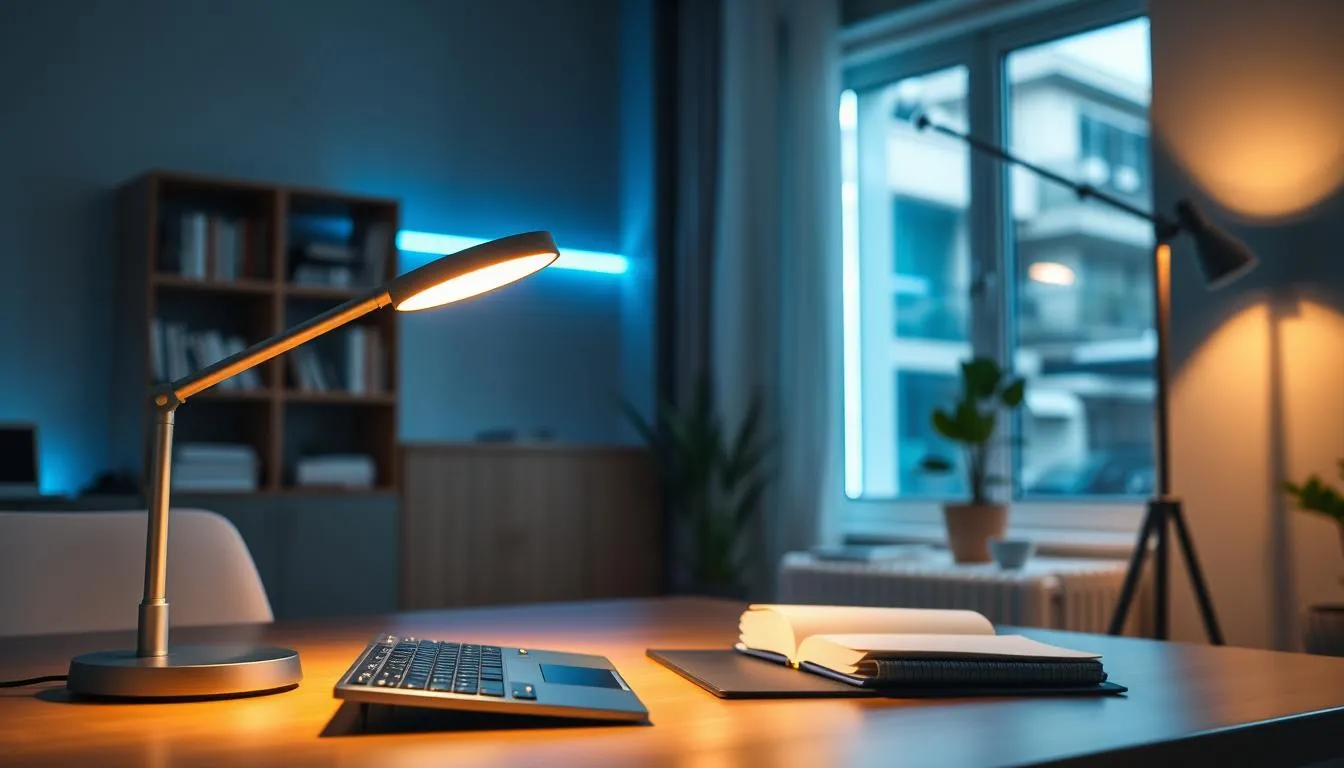
Adjustable-arm desk lamps: ergonomics and positioning
Adjustable-arm desk lamps from brands like Herman Miller and BenQ let you aim light precisely where you need it. Move the arm, tilt the head, or reposition the base to avoid glare on monitors. Look for models with tunable color temperature to support circadian schedules and personalized comfort.
Under-cabinet and task strip solutions for clutter-free desks
Under-cabinet LED strips and linear task lights free up desk space while eliminating shadows. Slim profiles fit beneath shelves or cabinets for an uncluttered surface. Choose diffused strips with dimming and color control to prevent hotspots and produce even illumination across the work area.
Light temperature and brightness recommendations for desk tasks
Bright, cool white light around 5000K to 6500K works best for focused tasks like data review and detailed assembly. For relaxed work or late afternoons, switch to warm white near 2700K to 3000K. Aim for adjustable lumen output and local dimming so each user can match light level to the task.
Practical lighting ideas for productivity include pairing an adjustable desk lamp with an under-shelf strip and a wall-mounted dimmer. That combo keeps clutter low and gives layered control. Use creative office lighting that supports focus and lets teams personalize their stations.
When specifying solutions, prioritize dimming, diffusers, and arm flexibility. These features create adaptable, comfortable setups and make these the best desk lighting options for modern workplaces.
Smart Lighting Systems for Energy Savings and Comfort
Smart lighting systems bring energy savings and personal comfort to modern offices. They let facility managers and teams automate daily rhythms, cut waste, and provide flexible control. Pairing LED fixtures with intelligent controls is one of the most effective workspace lighting solutions for lowering operational costs and improving occupant comfort.
Automated scheduling can mimic natural daylight by changing color temperature and brightness across the day. This supports circadian-friendly routines and reduces midday fatigue. Use scheduled scenes to boost alertness for morning meetings and to soften light for late-afternoon wrap-ups.
Occupancy sensors and daylight harvesting save energy by dimming or switching off lights when spaces are empty or sunlit. Integrating these controls with a building management system scales savings across floors. That integration makes maintenance easier and provides real-time data for smarter decisions.
Remote control and personalization via apps or voice assistants help employees tailor their zones without manual switches. Scene-setting creates consistent looks for open-plan areas, conference rooms, and quiet zones. These features pair well with creative office lighting to balance aesthetics and function.
For project teams, wall-mounted controllers and centralized dashboards enable custom configurations for client presentations or focused work sessions. Smart features like motion detection and timed dimming combine with LED longevity to reduce service calls. These approaches form practical lighting ideas for productivity across varied office layouts.
When specifying systems, evaluate compatibility with Trane, Johnson Controls, or Philips Hue for enterprise-grade options. Choose solutions that support remote updates, analytics, and easy commissioning. Thoughtful selection of smart lighting systems creates resilient, human-centered workplaces while meeting sustainability goals.
Linear Lighting Systems: Sleek, Even, and Efficient
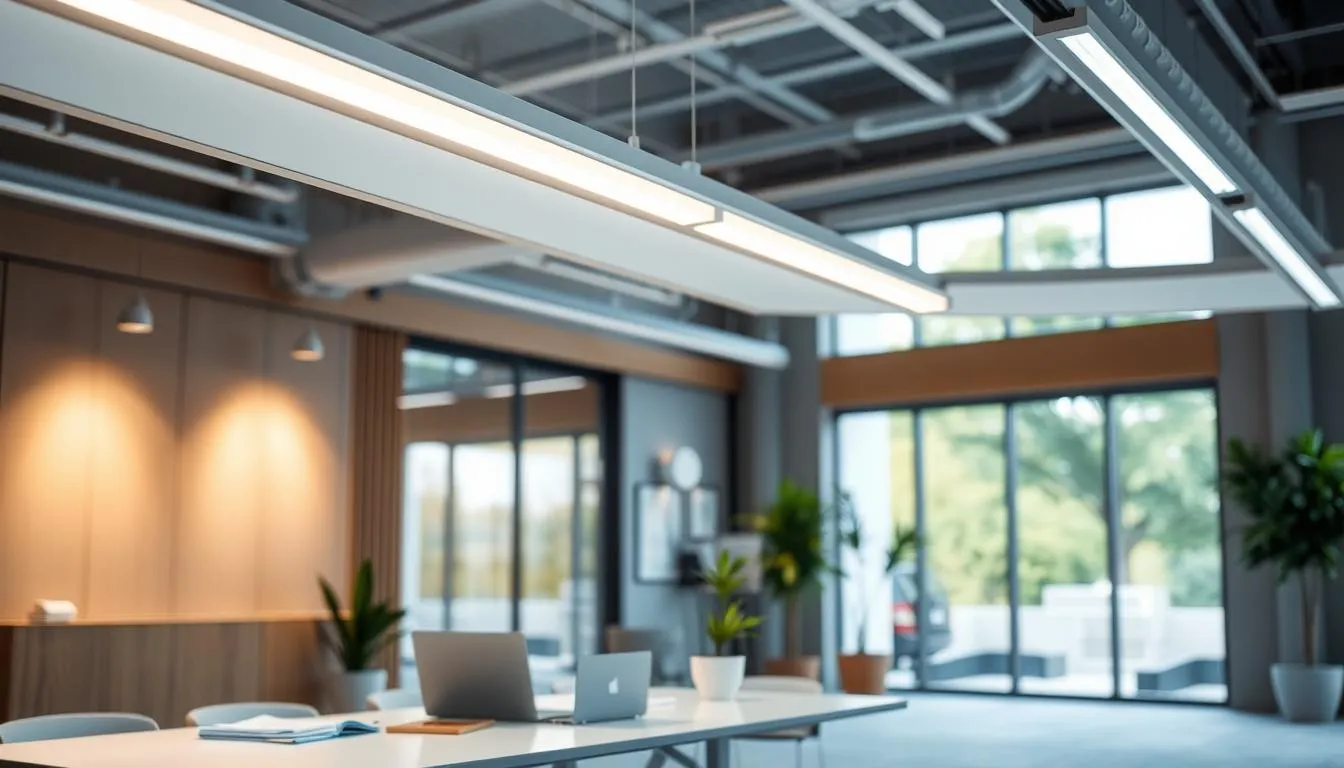
Linear lighting systems have become a go-to choice for modern offices. They deliver continuous, even illumination that reduces shadows and glare across open-plan workstations and long corridors.
Designers use slim recessed strips to tuck light into ceilings and suspended profiles to create clean lines. Track-based linear systems add flexibility when teams change layout or need targeted accenting.
These fixtures pair well with creative office lighting schemes that emphasize minimal profiles and visual rhythm. Tunable white and smooth dimming let managers set scenes for focus, meetings, or relaxed collaboration.
For corridor and workstation planning, linear fixtures ensure consistent lux levels. That uniformity supports ergonomic goals and reduces visual fatigue better than scattered point sources.
Specifiers often combine linear or flat-panel options with the best desk lighting options at task areas. A low-glare desk lamp plus continuous linear overhead light balances task contrast for computer work.
Choose from recessed, suspended, or surface-mounted variations to match ceiling depth and architectural intent. Diffusers, adjustable heads, and compatibility with controls expand the devices role in full workspace lighting solutions.
For practical guidance and layout examples, consult this resource on office lighting to see how linear approaches integrate into broader strategies: workspace lighting solutions.
When you specify linear lighting systems, prioritize uniform distribution, color temperature control, and serviceable mounts. These choices keep the aesthetic sleek and the environment comfortable for staff.
ColorChanging LEDs and Dynamic Ambience
Color and motion change how a space feels. Creative office lighting that uses color-changing LEDs can transform meeting zones, lounges, and event areas without major renovations. Small installations deliver big impact for mood and brand presence.
Using RGB/Wtunable LEDs to set mood and support events
RGB and tunable white systems let teams shift atmospheres quickly. Set a cool, focused palette for strategy sessions, then switch to warm, saturated hues for product launches or happy hours. App control and presets make scene changes fast and repeatable.
When to use cool white versus warm white for productivity vs. relaxation
Choose cool white (5000K6500K) for task areas and intense focus. Cool light increases alertness and visual clarity for detailed work. Pick warm white (2700K3000K) in lounges and informal meeting spots to encourage relaxation and conversation.
Tunable white solutions bridge both needs. Schedule subtle shifts through the day to support circadian comfort. This approach ranks high among lighting ideas for productivity in modern workplaces.
Practical installation ideas: undershelf, cove, and perimeter lighting
Under-shelf and under-desk strips provide useful task illumination while keeping surfaces tidy. Cove lighting creates soft, indirect glow that reduces glare near screens. Perimeter LED runs add depth and guide movement through open plans.
For modular setups or experiential displays consider compact kits and high-density strips. The HyperCube and HyperDrive product family offers app-driven patterns and sound-reactive options that fit many use cases; learn more about these color systems at color-changing lights.
- Under-shelf: discreet task boost with minimal glare.
- Cove: indirect light for ambient warmth and contrast.
- Perimeter: visual framing and wayfinding for open zones.
Pair these installs with a clear control strategy to keep energy use low. Good workspace lighting solutions combine flexibility, simple controls, and the right mix of color and intensity to support both work and culture.
Acoustic Lighting: Combining Illumination with Sound Control
Acoustic lighting blends light and sound control to make busy offices calmer and more productive. These fixtures pair LED sources with absorbent materials to cut reverberation while keeping high-quality illumination. The result fits well with creative office lighting trends and modern workspace lighting solutions.
How sound-absorbing luminaires reduce reverberation in busy offices
Sound-absorbing luminaires lower echo by using foam, fabrics, or perforated metal over an absorbent core. Placed above desks and meeting areas, they break up sound paths and drop background noise. That quieter backdrop makes conversations clearer and limits distraction for focused tasks.
Design scenarios where acoustic lighting improves concentration
Open-plan floors, huddle zones, and hybrid collaboration spaces benefit most from acoustic lighting. Suspended panels over benching areas reduce crowd noise for people on calls. Wall-mounted acoustic sconces work well in reception and breakout zones to keep ambient chatter from spreading.
Materials and forms for integrated acoustic performance
Designers choose from rounded pendant baffles, linear panels with embedded LEDs, and upholstered acoustic clouds. Fabrics and melamine foams offer soft finishes that absorb mid and high frequencies. Perforated metal paired with mineral wool gives a sleeker look while keeping acoustic function intact.
When selecting solutions, test for both sound absorption and light uniformity. Combining acoustic lighting with other workspace lighting solutions and lighting ideas for productivity creates balanced environments that support focus and well-being.
Natural Light Solutions: Skylights, Light Tubes, and Daylight Integration
Bringing daylight deeper into an office boosts mood and focus. Good natural light solutions pair architectural design with adaptive controls to spread light without glare. Thoughtful daylight integration supports circadian health and cuts energy use while shaping inviting work zones.
Maximizing windows and glass partitions
Place windows to capture morning and midday sun where teams meet and focus. Use full-height glass partitions and low-sill glazing to move light into interior rooms. Translucent materials and reflective surfaces can amplify daylight while keeping privacy.
Open sightlines and strategic furniture layouts help distribute light to desks. These tweaks fit with creative office lighting schemes and enhance lighting ideas for productivity across shared areas.
Skylights and light tubes: benefits and controls
Skylights and tubular daylight devices introduce roof light into core spaces. They raise perceived ceiling height and often improve well-being for staff in windowless zones.
Glare, hot spots, and solar heat gain are real concerns. Add diffusers, external shades, or adjustable louvers to manage direct sun. Pair skylights with dimmable fixtures so visual comfort stays steady as daylight shifts.
Complementing daylight with adaptive artificial lighting
Smart controls can dim or brighten artificial light to match available daylight. This creates consistent illumination and reduces energy draw. Tunable white lighting fills gaps during cloudy periods and supports task clarity.
Combine daylight-first strategies with workspace lighting solutions that offer presets for focus, collaboration, and relaxation. Use scene-based controls to switch quickly between modes without disrupting comfort.
| Element | Advantages | Design Considerations |
|---|---|---|
| --- | --- | --- |
| Windows + glass partitions | Even distribution, visual connection, reduced artificial lighting needs | Placement, privacy films, furniture layout |
| Skylights | Strong vertical daylight, spacious feel, wellbeing boost | Diffusers, shading, orientation, thermal control |
| Light tubes | Cost-effective roof-to-core daylighting, minimal disruption | Roof layout, diffuser quality, maintenance access |
| Adaptive artificial lighting | Consistent task lighting, energy savings, scene control | Sensor calibration, integration with daylight sensors, user presets |
Sustainable Lighting Choices for Lower Operational Costs
Choosing the right lighting cuts bills and shows commitment to eco-friendly design. Offices that adopt sustainable lighting choices see lower energy use, reduced maintenance, and a smaller carbon footprint. Practical choices blend high-performance components with thoughtful controls to deliver lasting value.
High-efficiency LED technology and lifecycle savings
Energy-efficient LEDs from brands like Philips and Cree outperform older lamps on lumens per watt. Long lifespans mean fewer replacements and lower labor costs over time. Choosing LEDs with verified lumen maintenance helps project total lifecycle savings more accurately.
Fixtures made from recycled metals and bioplastics
Fixtures crafted from recycled aluminum or bioplastics reduce upstream material impact. Manufacturers such as Armaturenwerk and Zumtobel offer ranges that pair recycled finishes with modern form. Those options support green procurement goals while keeping an office’s aesthetic fresh.
Strategies for specifying energy-efficient luminaires and controls
Specify luminaires with dimming drivers, occupancy sensors, and daylight harvesting capability. Integrate controls into the building management system for centralized monitoring and reporting. Automated scheduling and zoning cut waste during off-hours and improve return on investment.
| Element | Benefit | Example |
|---|---|---|
| --- | --- | --- |
| High-efficiency LEDs | Lower energy use, longer life, fewer replacements | Philips Fortimo linear modules |
| Recycled-material fixtures | Reduced embodied carbon, sustainable aesthetics | Armaturenwerk recycled aluminum pendants |
| Occupancy sensors | Automatic shutoff in unused spaces | Lutron Vive sensor networks |
| Daylight harvesting | Maintains comfort while minimizing electric light | Wattstopper integrated daylight controls |
| BMS integration | Centralized energy tracking and scheduling | Siemens Desigo and Tridium Niagara platforms |
Wireless and Rechargeable Fixtures for Flexible Workspaces
Wireless lighting and rechargeable fixtures transform flexible offices by removing cord clutter and speeding reconfiguration. Coworking operators and event managers gain mobility when fixtures plug into new layouts without electrical work. This approach fits creative office lighting schemes that need frequent change.
Batterypowered pendants and portable lamps let teams define zones on the fly. Place portable task lights at hotdesks to offer focused illumination. Use mobile pendants above temporary meeting pods to create intimacy without rewiring. These choices expand workspace lighting solutions while keeping design cohesive.
Benefits for coworking spaces and event areas
Rentals and shared offices benefit from fast install and removal. Wireless fixtures support event staging, popups, and flexible desk bookings. Operators can offer the best desk lighting options to members without permanent fixture changes.
Batterypowered pendants and portable task lights: placement ideas
Hang rechargeable pendants over reception islands for a welcoming first impression. Position portable task lights at adjustable workstations for reading and screen work. Keep a set in meeting rooms to tailor scene presets with smart controls for presentations or brainstorming.
Maintenance tips and runtime considerations
Check runtime specs before purchase and buy spare units for rotation during charging. Track charging cycles to plan battery replacement and keep firmware updated for smart wireless lighting features. Choose models with docking stations for tidy charging and clear status indicators for easy upkeep.
Custom and Modular Lighting for Adaptable Office Layouts
Flexible workplaces need lighting that bends to change. Custom lighting solutions and modular lighting let teams rezone, expand, or shrink without costly rewiring. These approaches support evolving workflows while keeping design cohesive.
Adjustable track systems give facilities rapid control. Fixtures slide and lock into place so layout changes happen in hours, not days. Reconfigurable linear modules snap together to form continuous runs or isolated task banks. These options speed up renovations and lower downtime.
How modularity supports changing team sizes and floor plans
Modularity makes seating swaps and temporary project rooms simple. Moveable luminaires follow new desks and meeting pods. That flexibility reduces the need for contractors and keeps lighting aligned with occupancy. Workspace lighting solutions designed this way cut long-term retrofit costs.
Collaborating with lighting designers for bespoke solutions
Work with experienced lighting designers and engineers to tailor systems for workflow and wellbeing. Designers from firms like Studio Volpi or lighting teams at ERCO can help specify durable fittings, smart controls, and sustainable materials. Their plans merge creative office lighting with performance goals.
- Plan for future power distribution to ease expansion.
- Select modular lighting components rated for frequent reconfiguration.
- Include controls that allow scene-setting for mixed-use areas.
Accent and Decorative Lighting to Elevate Office Aesthetics
Thoughtful accent lighting and decorative lighting lift a workspace from functional to memorable. Small focal elements shape first impressions in lobbies, meeting rooms, and lounges. Use these touches to guide visitors, highlight key materials, and set a tone that matches your brand voice.
Pendant clusters and sculptural fixtures create dramatic reception focal points. Large-scale statement pendants work well in hotel lobbies and office entries where creative office lighting can signal brand identity. Grouping different pendant sizes produces depth without overwhelming the space.
Wall sconces and uplighting define circulation and cozy niches by washing textures or framing art. Placing sconces at eye level clarifies pathways and reduces the need for bright overhead light. Uplights on architectural columns add visual layers that reinforce spatial hierarchy.
Using light for visual branding means matching tones and scenes to campaigns or events. Color-changing LEDs and tunable white let teams shift atmosphere while keeping energy use low. Specify decorative fixtures with high luminous efficacy and networked controls to protect efficiency while delivering impact.
Practical lighting ideas for productivity include balanced accent spots near collaboration hubs and softer decorative lighting in quiet zones. These choices support focus, ease transitions between tasks, and make shared spaces more inviting.
- Use pendant clusters to create arrival points and informal meeting nodes.
- Choose wall sconces to mark corridors and break areas without glare.
- Combine decorative lighting with tunable white for event-ready communal spaces.
Conclusion
Smart, human-centric choices make creative office lighting a true business advantage in 2025. Combine daylight integration, layered lighting, and tunable color temperatures with energy-efficient LEDs to support health, focus, and employee satisfaction. Prioritize linear and modular systems for uniform comfort and pair them with statement fixtures or wireless options to reinforce brand identity and flexibility.
Practical workspace lighting solutions range from under-cabinet task strips and the best desk lighting options to acoustic luminaires and color-changing LEDs. Use controls, occupancy sensors, and automated schedules to mimic natural rhythms and cut energy use. These lighting ideas for productivity help teams work better while reducing operational costs.
Partner with specialist lighting firms to specify sustainable materials, plan maintenance, and implement smart integrations. A strategic approachbalancing aesthetics, performance, and long-term savingsturns lighting from a utility into a defining element of your workplace experience.
FAQ
What is humancentric lighting and how does it improve productivity?
Humancentric lighting adjusts brightness and color temperature throughout the day to support circadian rhythms. Cooler, higherCCT light (around 5000K6500K) during focused work boosts alertness and concentration, while warmer tones (2700K3000K) in lounges and social areas aid relaxation. When paired with automated scheduling or tunable LEDs, these systems reduce fatigue, improve mood, and can enhance overall workplace performance.
How do I balance ambient, task, and accent lighting in an office?
Start with a soft ambient layer to eliminate harsh shadows across the space. Add task lightingadjustablearm desk lamps or undercabinet/undershelf stripsat individual workstations for targeted illumination. Use accent lighting (pendants, wall sconces, uplights) to highlight architecture, artwork, or collaboration zones. Dimming controls and diffusers help tune each layer to avoid glare and unwanted monitor reflections.
What are the best desk lighting options to reduce eye strain?
Choose adjustablearm desk lamps with dimming and colortemperature control so users can place light where needed without creating screen glare. Undercabinet or linear task strips are excellent for clean, even illumination that frees desk space. Look for diffused beams, lowglare optics, and tunable white options to match task demands and personal comfort.
Can smart lighting really save energy in commercial spaces?
Yes. Smart systems combine occupancy sensors, daylight harvesting, automated scheduling, and integration with building management systems to reduce wasted runtime. LEDs, controls, and scene presets cut energy use and maintenance costs while enabling circadian schedules and personalized scenes for employees.
Are linear lighting systems suitable for openplan offices?
Absolutely. Linear fixtures provide uniform illumination across open workstations and corridors, minimizing shadows and glare. Ultraslim recessed or suspended linear profiles integrate cleanly with architecture and often include tunable white and dimming for uniform visual comfort and flexibility.
When should I use colorchanging LEDs versus fixed white light?
Use tunable white (RGB/W) for environments that need both productivity and ambiancecooler tones for focused tasks, warmer tones for social or hospitality areas. RGB/W systems are helpful for events, branding moments, and seasonal changes. For pure task zones, fixed tunable white with a defined CCT range often provides the best consistency and efficiency.
What is acoustic lighting and when is it worth specifying?
Acoustic lighting integrates soundabsorbing materials with luminairessuspended panels with embedded LEDs or wallmounted absorbent sconces. It’s valuable in openplan offices, collaboration hubs, and busy reception areas where reducing reverberation improves speech clarity, concentration, and wellbeing.
How can I bring more daylight into interior workspaces without causing glare?
Maximize window placement and use glass partitions to distribute daylight. Skylights or light tubes can channel roof light into deep plans but require diffusers, shading, and solar control to manage heat and glare. Combine daylight with adaptive artificial lighting (daylight harvesting and tunable LEDs) to keep visual comfort consistent all day.
What sustainable lighting choices deliver the biggest operational savings?
Highefficiency LEDs paired with smart controls (occupancy sensors, daylight harvesting, scheduling) provide the largest energy and maintenance savings. Specify fixtures with verified lifecycle data and consider products using recycled metals or bioplastics to reduce embodied carbon while maintaining design quality.
Are wireless and rechargeable fixtures reliable for flexible workplaces?
Yesbatterypowered pendants and portable task lights support rapid reconfiguration in coworking spaces and event areas. Select models with clear runtime specs, easy charging or docking stations, and robust firmware support. Keep spare units for rotation to avoid downtime during charging cycles.
How does modular lighting help with future office reconfigurations?
Modular systemstrack lighting, reconfigurable linear modules, and plugandplay power railsallow facilities to rezone spaces without major rewiring. They support evolving team sizes and hybrid layouts and reduce upgrade costs by enabling targeted changes instead of wholesale replacement.
What role do statement pendants and sculptural fixtures play in office design?
Large pendants and sculptural luminaires create focal points in reception areas and collaboration hubs, reinforcing brand character and design intent. When specified with appropriate efficacy and controls, they deliver visual impact without compromising energy goals.
How can I avoid monitor reflections and hotspots when placing lighting?
Use diffused fixtures, indirect uplighting, and linear luminaires with shields. Position task lamps so light falls beside or in front of work surfaces rather than directly behind the screen. Dimming and adjustable color temperature also help reduce glare and visual fatigue.
Should I work with a lighting specialist for an office project?
Working with a lighting designer or specialist firm helps align lighting strategy with workflow, wellbeing goals, and brand identity. Specialists can specify controls, acoustic luminaires, sustainable materials, and integration with BMS for a futureproof solution that balances performance and aesthetics.