
Creative Home Office Design Ideas for Small Spaces
Optimize your work-from-home area with innovative small home office design solutions that maximize style and productivity.

29 min read
Did you know that more than 30% of U.S. homeowners repurposed a spare nook or closet into a workspace during the last decade? That surge shows how demand for smart, compact solutions has reshaped how we think about a productive home office.
In this short introduction, we’ll explore small home office design that blends form and function. Expect creative workspace ideas that prioritize an efficient home office layout without sacrificing style.
Designers recommend a clear set of essentials: a well-sized desk, generous storage with cabinet doors to hide printers and paperwork, task lighting, and a comfortable chair. Practical footprints range from a minimal desk-and-chair corner up to about 8 x 10 feet for built-ins and roughly 10 x 13 feet to float a desk with cabinetry. These guidelines help you choose the right plan for design for small spaces.
Inspiration often starts with visual resources like Ann Bushs Pinterest collection of small offices and product-led solutions from brands such as Resource Furniture. Modular systems, flip-down desks, and wall beds can turn a guest room or attic into a daily retreat while preserving square footage and value.
Throughout the article we’ll cover layout tips, vertical storage, lighting tricks, and decluttering routines to keep focus. For additional photo-driven ideas and case studies, see a curated gallery at Architectural Digest, which demonstrates how luxury finishes and smart planning elevate small home office ideas into serene, productive spaces.
Key Takeaways
- Focus on core elements: desk, storage, task lighting, and a supportive chair.
- 8 x 10 feet works well for built-ins; about 10 x 13 feet allows a floated desk and cabinetry.
- Use modular and fold-away furniture to maximize function in tight footprints.
- Prioritize natural light, privacy, and a declutter routine (quarterly) to maintain flow.
- Layered lighting and vertical storage make small rooms feel larger and more usable.
Planning a functional small home office design
Start by taking clear measurements and noting sunlight patterns, door swings, and traffic paths. Use Pinterest boards to test layouts and compare ideal locations for home office set-ups before committing. Visual boards help you see which nook or spare bedroom will best support your workflow.
Designers recommend choosing spots with natural light and privacy. Spare bedrooms, alcoves, attics, garage corners, and stair landings can work when measured carefully. Oberhauser suggests first-floor rooms away from busy zones reduce distractions. Oholendt adds that your Zoom backdrop should factor into location decisions.
List every tool and item you use daily, weekly, and rarely. That inventory guides storage choices and helps create an efficient home office layout. A desk sized to the room, one ergonomic chair, and targeted task lighting make a strong core. Built-ins or closed cabinets hide printers and paperwork to keep the surface clear.
Decide whether functionality or looks come first for your routine. Schroder notes that loving your surroundings boosts focus, while quiet, minimal spaces favor deep work. If you host frequent client calls, tilt toward a polished aesthetic. If you need solitude for concentrated tasks, prioritize sound and sightline control.
When space is shared, plan for transitions with multifunctional furniture. Wall beds with desks, fold-down units, and slim storage make a room guest-ready and work-ready. These choices add resale appeal and keep your creative workspace ideas flexible as needs change.
Use a simple mood board to finalize texture, lighting, and storage. Match the desk scale to circulation needs and set storage by frequency of use. This method produces an efficient home office layout that feels intentional and supports daily habits.
| Planning Step | Action | Benefit |
|---|---|---|
| --- | --- | --- |
| Measure and map | Record room dimensions, window positions, and traffic | Prevents size surprises and fits the right desk |
| Compare locations | Use Pinterest boards to visualize spare rooms, alcoves, and corners | Identifies the ideal locations for home office within your floorplan |
| Inventory essentials | List devices, paperwork, and daily tools by frequency | Shapes storage needs and an efficient home office layout |
| Prioritize | Choose productivity or aesthetics based on work style | Boosts focus or creates a camera-ready backdrop for calls |
| Choose multifunctional pieces | Select fold-down desks, wall beds, or cabinets with hidden storage | Maintains room flexibility and supports creative workspace ideas |
| Create a mood board | Combine texture, lighting, and storage samples | Finalizes a cohesive plan that feels right and works well |
Picking a desk for a small home office design means balancing footprint, function, and finish. Start by measuring your tech needslaptop, single monitor, or dual screensthen match those needs to a compact desk for small spaces that still leaves room to move.
Wall-mounted and fold-away solutions are lifesavers where floor space is scarce. A wall-mounted desk or a fold-down desk tucks work away when you dont need it, freeing a room for other uses during evenings or weekends.
Think about how you will use the desk during video calls. Place a wall-mounted desk where natural light flatters your camera background. Choose models with built-in cable channels to keep the view tidy on-screen.
For corner setups, an L-shaped desk can deliver more surface without crowding the room. A slim freestanding profile gives the same workspace across two planes while keeping circulation open.
Designers often recommend the Abaco-style freestanding desks and the LGM-style units with integrated fold-down surfaces for compact power and storage. Look for under-desk drawers or shelves that hold peripherals and cut desktop clutter.
Surface choices shape both feel and performance. Wood veneers hide wear, matte paints resist fingerprints, and brushed bronze or brass accents lend luxe finishes that read expensive in a small footprint.
Leather desk pads, textured laminates, and neutral palettes add depth without visual noise. Prioritize finishes that stand up to daily use and make the space feel intentional.
Use a shortlist from inspiration boards on Pinterest to compare footprint, style, and storage. Test the scale with painters tape on the floor to confirm that your chosen compact desk for small spaces fits circulation paths and camera angles.
Space-saving furnishings and multifunctional solutions
Small homes ask for smart choices. Space-saving furnishings turn a tight room into a flexible zone for work and rest. A well-chosen piece can free floor area, hide clutter, and offer a polished look that lifts a whole apartment.
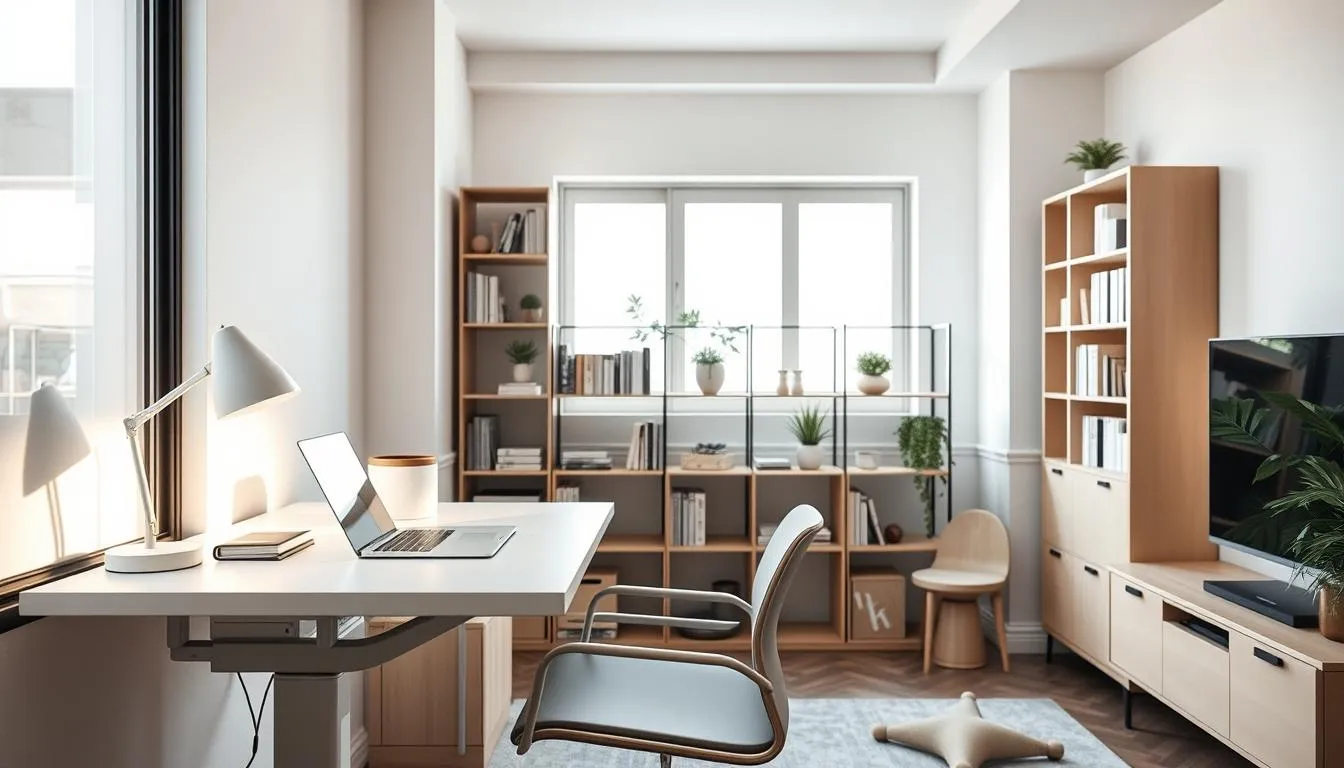
Designers often recommend a wall bed desk combo when a guest room must double as an office. A unit with a fold-down surface gives a full work area by day and a comfortable bed by night. Select models with built-in lighting and wire management to keep tech tidy.
For tiny nooks, a flip-down desk in a cabinet or credenza tucks work away after hours. Choose sturdy hardware and soft-close hinges for daily use. A compact flip-down desk pairs well with a slim task chair that slides under the cabinet when not in use.
Modular furniture helps a space evolve with changing needs. Systems from brands like IKEA and Pottery Barn can include adjustable shelving, integrated outlets, and configurable finishes to match a rooms style. Start with a base module and add pieces later to avoid overbuying.
Investing in quality finishes and durable mechanisms pays off. Solid hardware keeps a wall bed desk combo operating smoothly for years. Durable veneers and well-mounted cabinetry make modular furniture feel upscale even in a modest budget.
Below is a quick comparison to help decide which multifunctional solution fits common scenarios.
| Solution | Best for | Key features | Pros | Cons |
|---|---|---|---|---|
| --- | --- | --- | --- | --- |
| Wall bed desk combo | Guest-room offices | Full bed + fold-down desk, built-in storage, wiring | Saves floor space, ready for guests, integrated storage | Higher install cost, needs strong wall mounting |
| Flip-down desk cabinet | Entryways and living rooms | Compact workspace, soft-close hinge, interior shelves | Tucks away easily, low visual clutter, portable | Smaller work surface, limited legroom |
| Modular furniture | Growing households and renters | Configurable modules, adjustable shelves, power options | Flexible layout, expandable, often budget-friendly | Varied build quality, may need add-ons for full function |
Think up, not out. A strong efficient home office layout begins by stacking storage where the eye naturally travels. Tall units free the floor and create room for a compact desk and comfortable circulation.
Floor-to-ceiling shelving systems and built-ins
Floor-to-ceiling shelving turns awkward tall walls into organised zones for books, reference binders, and display items. Custom built-ins from Resource Furniture-style designers fit odd alcoves and match trim for a seamless look.
Use adjustable shelves to shift storage by season or project. A mix of open shelves and closed cabinets keeps frequently used items within reach while preserving visual calm.
Concealed storage for printers, cables, and paperwork
Concealed office storage keeps the desktop tidy and improves camera backgrounds for video calls. Fit a slim cabinet or a roll-out drawer for a printer, then add a cable channel and power strip to hide cords.
Labelled drawers and color-coded folders make retrieval fast. Designers like Oberhauser and Schroder recommend organising by how often you use each item to decide what stays on the desktop and what gets tucked away.
Using under-desk and above-door storage effectively
Under-desk pedestals and rolling filing cabinets capture essential paperwork without eating floor space. Slim drawers that mount beneath the desktop hold stationery and notepads.
Above-door shelves and overhead cabinets reclaim wasted vertical zones near ceilings. These spots work well for archived files or seasonal supplies that you rarely access.
For multi-functional solutions and practical examples, see a concise guide on smart storage ideas for maximising space in a small. Small investments in vertical storage small office strategies and concealed office storage can transform a cramped room into an efficient home office layout that supports focus and flow.
Lighting strategies to expand and brighten small offices
Good lighting makes a compact workspace feel open and calm. Start by thinking about how to layer sources so the room reads larger and stays functional through long workdays.
Layered lighting: ambient, task, and accent
Mix ceiling fixtures, a focused desk lamp, and subtle accent lights to create depth. Layered lighting lets you shift mood and brightness without changing furniture or paint.
Use a small pendant or recessed ambient light for even coverage. Add LED strips on shelves or backlit cabinetry to draw the eye upward and make the ceiling feel higher.
Positioning task lights to reduce screen glare
Place task lamps to the side opposite your dominant hand to avoid shadows on documents. Aim light so it illuminates paperwork, not the monitor face.
Choose fixtures with adjustable arms and dimmable LEDs. Tunable color temperature helps reduce eye strain when working at dusk or on long video calls. These moves cut glare and keep the screen readable.
Using mirrors and reflective surfaces to amplify natural light
Set a mirror across from a window to amplify natural light and bounce it into darker corners. Shiny finishes on desks or a metallic lamp base can give a similar lift.
Design for small spaces by placing translucent shades or sheer curtains at windows to soften direct sun while keeping brightness. A window-facing desk will amplify natural light for video calls but position a screen or use blinds to reduce screen glare when needed.
- Tip: Integrate under-shelf LED strips for late-night tasks to reduce eye strain.
- Tip: Use warm white ambient lights with cooler task lamps for balanced contrast.
- Tip: Reflective backsplashes or light-colored shelving help amplify natural light without clutter.
Ergonomic seating and comfort in small workspaces
Choosing the right seating shapes how you work. In a compact room, an ergonomic seating small office setup keeps you comfortable without crowding the floor. Pick pieces that support long hours and fit the footprint of the room.
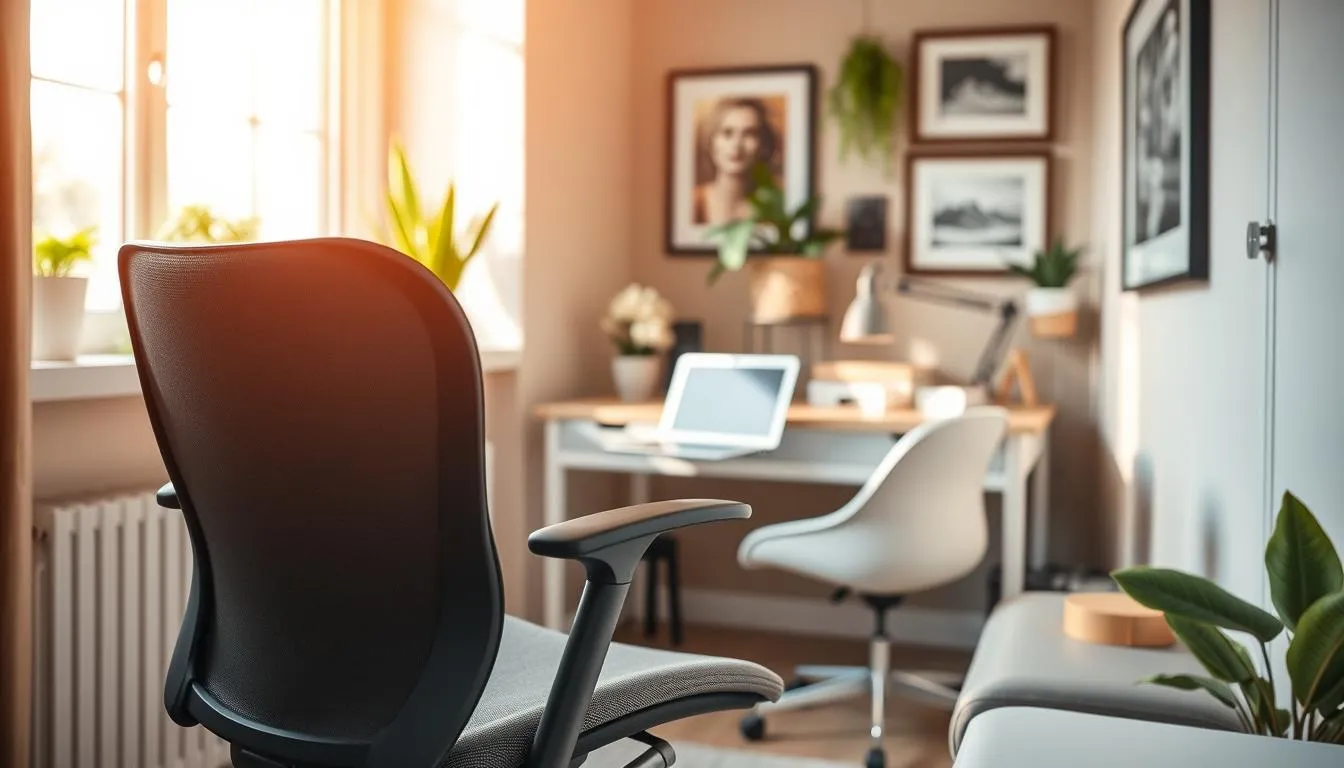
Choosing an ergonomic task chair that fits the space
Look for a task chair for small spaces with a slim profile, adjustable lumbar support, and casters for easy repositioning. Brands like Herman Miller and Steelcase make compact models that offer real posture support while preserving circulation paths.
Armless or lowarm chairs save width without sacrificing adjustability. A breathable mesh back helps with temperature control in tight quarters.
Adding a small lounge nook or posture-support accessories
If the room allows, a narrow lounge chair creates a short break zone. If space is tight, add posture support with a lumbar cushion, footrest, or a compact sit-stand converter to reduce static sitting.
Simple upgrades like a memory-foam lumbar pad or an angled footrest improve comfort and reduce fatigue between calls.
Balancing comfort with footprint and circulation
Measure clearances before you buy. Leave a 3036 inch path behind and around the desk so movement feels natural. Choose swivel chairs with small bases to preserve walkway space.
Plan an efficient home office layout by placing the desk near light and routing storage vertically. That keeps the seating area uncluttered and helps the room serve dual functions for guests or living space.
Color, texture, and finishes to make small spaces feel larger
Choosing the right color for small spaces sets the tone. White, soft blues, and pale grays expand sightlines and keep a room bright. Use calming palettes to make the eye rest and to support focus during work sessions.
Calming palettes versus bold accent walls
Keep a primary palette light and consistent across walls, trim, and major furniture to reduce visual clutter. Small doses of an accent wall work when placed behind the desk to anchor the space without overwhelming it. Blues like Benjamin Moores Blue Bayou offer calm that shifts beautifully from day to evening.
For examples of balanced approaches, visit a practical guide on small-office color choices at StylebyEmilyHenderson.
Using luxe textures like leather, wood, and linen for depth
Layer tactile materials to add richness without busy patterns. A leather chair, a linen shade, and a burl wood shelf create subtle contrast that reads as intentional and upscale. Luxe textures reflect light differently, which adds perceived depth while keeping the scheme calm.
Match storage finisheswhite lacquer or warm woodto the walls to preserve openness. Add small reflective accents like glass cloches or brass hardware to bounce light and create an airy vibe.
When to choose wallpaper or textured wallcoverings
Statement wallpaper small office installations can define a workspace and bring luxury into compact rooms. Pick patterns with restrained scale and colors that harmonize with the rooms palette so the wall reads as a single, cohesive surface.
Textured plaster or grasscloth works well when you prefer subtle depth over pattern. Use shades and finishes that stay close to wall color to keep brightness high and visual movement low.
| Design Move | Benefit | Best Use |
|---|---|---|
| --- | --- | --- |
| Light, uniform wall color | Expands perceived space | Small rooms with limited natural light |
| Single accent wall | Creates a focal point without clutter | Behind desk or seating area |
| Luxe textures (leather, linen, wood) | Adds depth and tactile interest | Furniture, shades, shelving |
| Wallpaper small office | Defines the workspace and adds luxury | Small-scale patterns or textured wallcoverings |
| Reflective accents (glass, brass) | Amplifies light and airy feel | Accessories and hardware |
A calm, tidy backdrop makes every call feel more polished. Think of your background as a stage set that supports your presence without stealing attention. Small tweaks can turn a cluttered corner into a camera-friendly home office that reads well on screen and reflects your taste.
Arranging shelving, art, and plants behind the desk
Place one focal element at eye level, such as a framed print or a sculptural plant. Balanced shelving with a mix of books, a small lamp, and a low-profile plant creates depth. Built-ins with integrated LED strips give subtle backlighting that reads as intentional staging.
Controlling background clutter for professional calls
Hide printers, cables, and files behind cabinet doors to keep lines clean. Use closed storage for bulky items and open shelves for a few curated objects. A single color palette for frames and storage boxes reduces visual noise and keeps the Zoom background design cohesive.
Lighting tips for flattering video presence
Face natural light when possible. If the window sits behind you, add a soft front-facing lamp to avoid silhouette effects. Layered lighting with a warm key light and a cooler backlight prevents flat images and enhances skin tones.
Test your setup on Zoom or Microsoft Teams before important meetings. Small changes in camera height, distance, and background spacing can improve perceived depth and professionalism. These creative workspace ideas will help you present a consistent, camera-ready image for every call.
Personalization and gallery walls in compact offices
Make your small work nook feel personal without crowding the room. A thoughtful personalization small office strategy uses a few meaningful pieces to spark focus and lift mood.
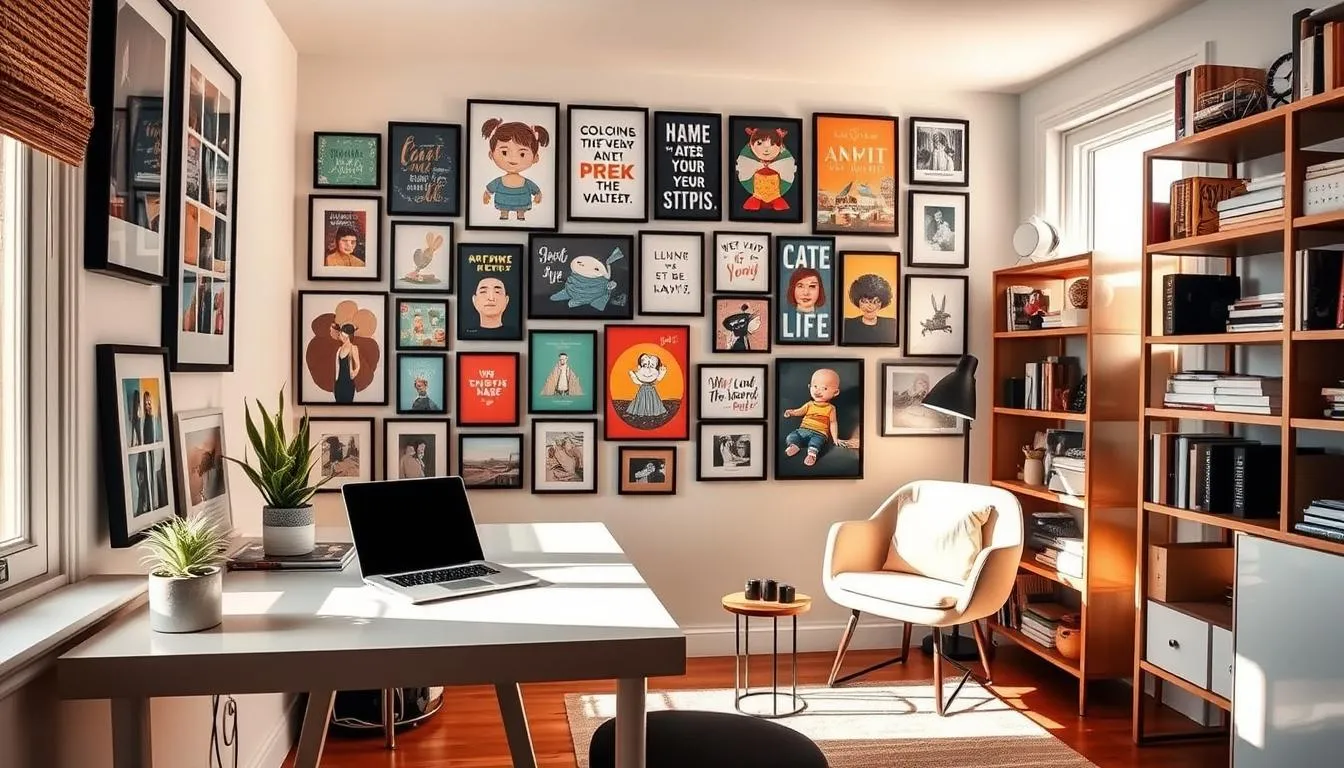
Begin a gallery wall small space plan by choosing one strong piece as an anchor. Place that focal artwork at eye level, then arrange smaller frames around it. Lay frames on the floor first to test balance before you hammer nails.
Curate items that keep you motivated. Framed photos, a sketch from a favorite trip, and a framed quote can become inspiring workspace decor when grouped with a consistent frame color or matting. Use shelves and shallow boxes to limit volume and hide less attractive essentials.
Keep scale and palette tight to avoid visual noise. For design for small spaces, stick to two frame finishes or a single color family. This simple rule preserves calm and supports concentration during work calls.
Try digital mockups and mood boards on Pinterest to preview layouts. If you want guidance rooted in flexible systems, explore resources that suggest starting with the largest piece and building outward, then refine with storage and small accents for polish. Explore practical layout tips.
Balance personality with restraint. A few well-chosen objects create an inspiring workspace decor that supports productivity. Keep surfaces tidy and rotate items seasonally to keep the vibe fresh while honoring the principles of thoughtful design for small spaces.
Integrating technology and cable management for neat layouts
A tidy tech setup makes any compact workspace feel larger and calmer. Plan power needs around your devices before you buy furniture. That keeps cord clutter low and supports an efficient home office layout that works day to day.
Built-in outlets, USB ports, and powered shelving
Choose desks and shelving with integrated power. Many brands now offer built-in outlets and USB ports so chargers stay within reach. Powered shelving frees up the desktop by powering lamps, printers, and docks without extra extension cords.
Strategies for hiding cables and printers in small setups
Create dedicated spots to hide printer gear. A small cabinet or a recessed niche works well if you want to hide printer and paper supplies. Use under-desk cable trays and recessed power strips to keep lines off the floor. Wire grommets, adhesive clips, and velcro straps help route cables down walls and behind cabinets.
Choosing tech that minimizes desk footprint
Favor compact, multi-function devices. All-in-one printers, laptop docks, and wireless chargers reduce the number of power cords. Pick monitors with built-in USB hubs or choose a single docking station for a laptop and phone.
Use a short inventory checklist: list each device, its power needs, and ideal placement. That simple step aligns furniture choices with electrical planning and keeps a cable management small office strategy realistic.
- Under-desk trays: hide power strips and excess cable length.
- Recessed strips: reduce trip hazards and free floor space.
- Cabinet doors: conceal printers and supplies to hide printer clutter.
- Powered shelving: powers gear at shelf-level for cleaner surfaces.
Designers from Dwell and Architectural Digest recommend building tech needs into the layout. Match furniture with the list of devices so the final efficient home office layout feels intentional and stays neat.
Making the most of unconventional nooks and alcoves
Small, odd corners can become focused work zones with the right plan. Think beyond a standard desk and imagine an alcove home office that uses every inch. A clear brief, measured drawings, and a few smart purchases turn stair landings, under-stair spaces, and narrow hallways into calm, usable areas.
Turning stair landings, hallways, and closet-turned-cloffice into offices
Use a stair landing or hallway for short tasks, call work, or a dedicated laptop spot. Install a slim console desk or a fold-down surface that tucks away when not in use. For a closet office, add ventilation, layered lighting, and a shallow desktop to fit depth limits.
Measure depth and door swing before buying furniture. A closet office performs best with task lighting, a low-profile chair, and storage that keeps paperwork off the surface. This setup supports focused work without needing extra square footage.
Custom-fit desks and shelving for odd dimensions
Custom millwork firms and brands like Resource Furniture make pieces that match irregular walls and sloped ceilings. Built-in shelves maximize vertical space while a fitted desk can slot into weird alcoves with no wasted gaps.
Choose materials and finishes that reflect light to keep the small area bright. Open shelving keeps the room from feeling boxed in. Combine drawers and cubbies to hide cables and supplies.
Acoustic and privacy considerations in open or shared zones
Acoustic privacy small office solutions matter in shared homes. Use rugs, curtains, and upholstered panels to absorb sound. A bookcase or screen can serve as a visual and sonic barrier in open-plan areas.
For higher privacy, add seal strips to closet doors, a ventilation grille, and an acoustic panel behind the desk. These interventions reduce noise transfer and help steady concentration during calls.
| Space | Best-fit solution | Key benefit |
|---|---|---|
| --- | --- | --- |
| Stair landing | Slim wall-mounted desk, task lamp | Quick setup for calls and short tasks |
| Hallway alcove | Built-in shelving with fold-down surface | Compact storage without blocking traffic |
| Closet office | Shallow desktop, ventilation, layered lights | Private workstation that hides away |
| Under-stair nook | Custom-fit desk, angled shelving | Uses awkward volume efficiently |
| Open-plan corner | Bookcase divider, acoustic panels, rug | Visual separation and sound dampening |
Decluttering routines and organizational systems for sustained focus
A calm desk supports clear thinking. Start with a quick inventory of daily-use items to see what stays on your surface and what belongs in drawers. Small steps each day make it easier to sustain focus and prevent pileups.
Use the three-tier method: keep most-used tools within arms reach, store occasional items higher or in cabinets, and archive rare items elsewhere. This approach helps create an efficient home office layout that matches how you work.
Inventorying daily-use items to reduce excess
Lay out everything you touch during a typical workday. Group pens, chargers, notebooks, and reference materials. Toss duplicates and items you havent used in months.
Resource Furniture recommends documenting what remains so you can plan built-in drawers and under-desk compartments for frequently used objects. A short list saves time when setting up storage.
Categorizing and storing by frequency of use
Label bins and shelves to mark zones: daily, weekly, and occasional. Use clear totes or printed labels so you know where things go at a glance.
Model systems from Pinterest for hacks and label ideas. Pair modular storage with a clear workflow to keep the room tidy and to sustain focus during busy stretches.
Quarterly declutter and maintenance rituals
Set a quarterly date for a deeper sort and purge. Review office supplies, archived paperwork, and tech accessories. Replace worn items and discard what no longer serves you.
Adopt simple rituals: an end-of-day five-minute tidy, a weekly inbox sweep, and the quarterly deep clean. These repeatable actions form the backbone of organizational systems small office owners rely on.
For a full list of systems that streamline paperwork and schedules, see this practical guide on essential organizational systems: essential organizational systems.
Lighting, biophilia, and color psychology for a calming workspace
A small office can feel like a calm retreat with the right mix of light, plants, and color. Good lighting layers reduce eye strain and make compact layouts feel larger. Natural materials and carefully chosen hues bring comfort without clutter.
Incorporating plants and natural materials to enhance cognition
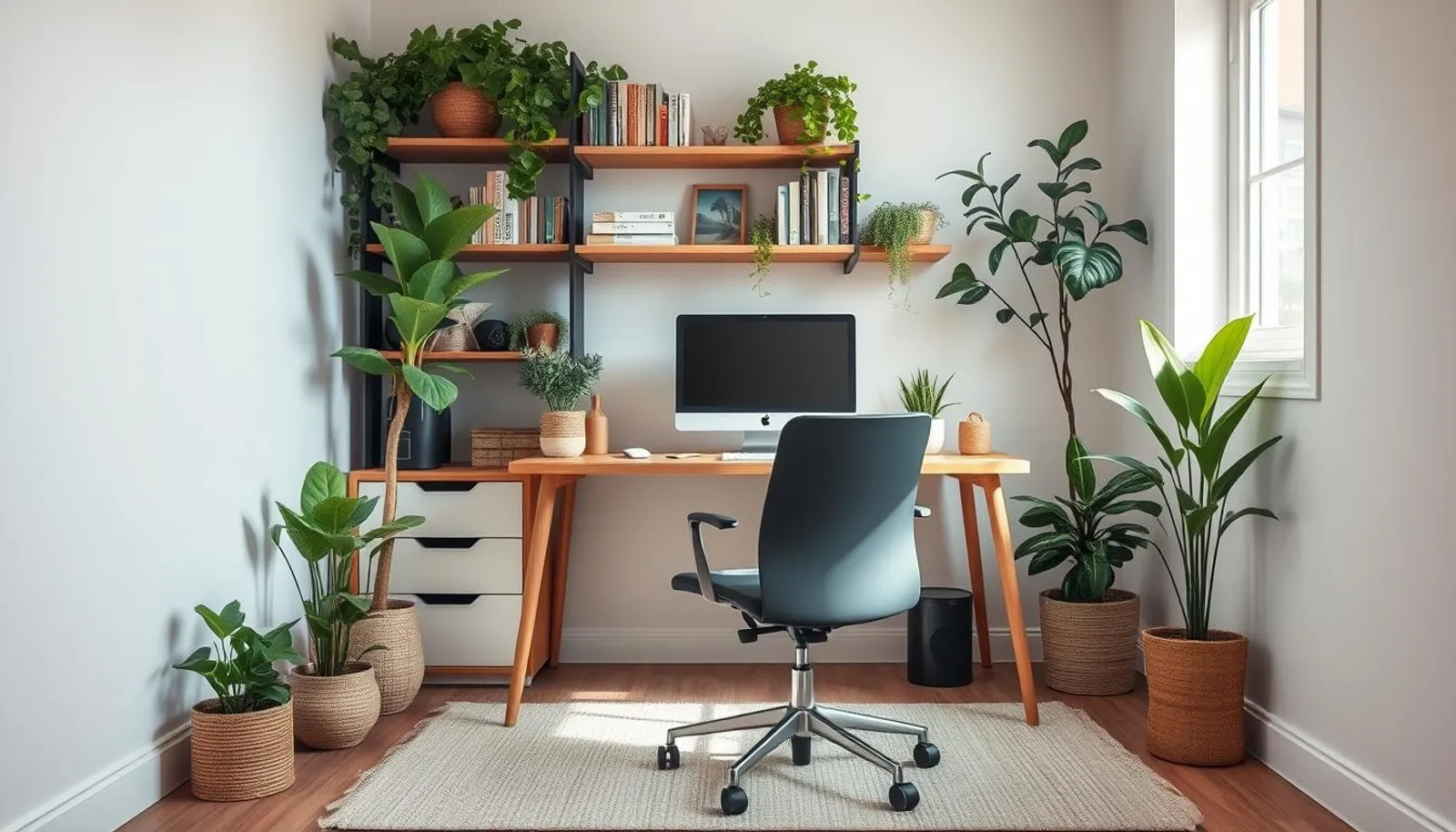
Bring philodendron, pothos, or snake plant into shelves or hanging planters to save desk space. These plants for productivity boost air quality and give visual rest between tasks. Use wood accents, linen curtains, and a textured rug to add warmth and steady focus.
Color choices that promote calm and productivity
Choose a calming workspace color like a soft blue or muted green to lower stress and sharpen attention. Benjamin Moore’s Blue Bayou is an example designers use to create a focused backdrop. Keep contrast low and add one warm accent to avoid a flat look.
Neuroaesthetic touches: texture, soft lighting, and personal scent
Apply neuroaesthetics by mixing tactile surfaces: burl wood, leather accessories, and woven linen. Use layered lighting with a warm task lamp and dimmable ambient fixtures to create a retreat-like mood. A familiar candle or gentle diffuser can anchor routine and creativity.
For design for small spaces, prioritize compact planters, vertical greenery, and soft-touch elements. These choices support sustained focus and make compact offices feel restorative.
Creative workspace ideas for shared and multipurpose rooms
Turning one room into a multipurpose room office takes planning and a clear sense of function. Small changes make a big difference when you need a desk next to a washer, a guest bed, or pantry shelves. Practical strategies help the space feel intentional and calm.
Combining laundry rooms, guest rooms, or pantries with offices
Place the desk where it least disrupts household flow. In a laundry/office combo, position the workspace near natural light and set machines on the opposite wall. Guest-room offices benefit from a wall bed or a sofa bed so the room switches roles quickly. Pantry conversions often use narrow desks and vertical storage to keep food zones separate from paperwork.
Clear visual boundaries for better work-life separation
Define the work zone with rugs, paint, or a freestanding bookcase. Curtains or a rolling screen create soft but effective visual boundaries home office users appreciate. Use different lighting temperatures to signal work time and rest time within the same footprint.
Furniture that transitions between functions smoothly
Choose fold-away furniture and purpose-built cabinets that hide clutter in seconds. Wall beds with integrated desks or flip-down desks offer guest-ready solutions without sacrificing a full work setup. Durable hardware and easy mechanisms keep transitions reliable over time.
For more multipurpose inspiration, browse curated examples on this Pinterest board. It highlights practical shared room workspace ideas and creative workspace ideas that suit real homes.
Conclusion
A well-planned small home office design proves that limited square footage need not limit productivity or style. Start by measuring your footprint and inventorying needs, then choose a functional desk, ergonomic chair, and concealed storage to keep surfaces clear. Layered lighting and thoughtful tech integration help an efficient home office layout feel roomy and camera-ready.
Use vertical storage, flip-away desks, or modular systems to maximize utility in tight corners and closets. Practical examples show that a built-in setup in an 8 x 10 space or a floating desk in a roughly 10 x 13 room can deliver both comfort and circulation. For ongoing inspiration, browse Pinterest and industry resources like small office solutions that highlight clever configurations and finishes.
Apply regular decluttering and simple zoning to maintain focus, and tailor aesthetic touchesmaterials, color, and plantsto your taste so the room invites work. These creative workspace ideas and design for small spaces strategies boost home value and well-being by making every inch count while keeping the space efficient, attractive, and durable.
FAQ
How do I choose the best location for a small home office?
Start by measuring available footprints and mapping natural light, traffic patterns, and noise sources. Spare bedrooms, attics, stair landings, closets, and alcoves can all work. Prioritize a spot with good daylight and privacy when possible; if you take frequent video calls, consider the background and camera lighting. For tight built-ins, an 8 x 10-foot area is workable; to float a desk with cabinetry, aim for roughly 10 x 13 feet. Use mood boards or a Pinterest collection to compare options before committing.
What are the essential elements every small home office needs?
A properly sized desk, an ergonomic chair, generous concealed storage, and layered lighting are the must-haves. Match desk depth and width to your tech (laptop versus multi-monitor). Use cabinet doors or a printer closet to hide paper and peripherals, and add task lighting plus ambient and accent layers. Keep frequently used items within reach and hide the rest to maintain a clean Zoom-ready background.
Which compact desk types work best in tight quarters?
Wall-mounted fold-down desks and flip-down cabinets save floor space and tuck away when not in use. Slim freestanding desks, armless or with under-desk storage like the Abaco style, suit narrow rooms. L-shaped desks optimize corners for multi-monitor setups without crowding walkways. Choose finishes that resist wear and reduce visual clutter for a luxe feel in small spaces.
Can a guest room double as a productive home office?
Absolutely. Multifunctional pieceswall beds with integrated desks, modular cabinets, and flip-down deskslet a room perform both roles. Build in storage and choose hardware rated for frequent transitions. This approach preserves guest readiness while maximizing square footage and can boost resale value if executed with quality finishes.
How do I maximize vertical storage without making the room feel cramped?
Use floor-to-ceiling shelving, shallow built-ins, and upper-door shelves to reclaim height. Integrate cabinet doors to conceal clutter and install LED-powered shelving for both function and ambiance. Keep frequently used items lower and reserve high shelves for decor or seasonal storage. Vertical storage paired with neutral palettes and mirrors helps maintain an open feel.
What lighting strategy makes a small office feel brighter and larger?
Layer lighting: combine ambient ceiling fixtures, task lamps, and accent or backlit shelving. Position task lights opposite your dominant hand to avoid shadows. Use tunable bulbs and dimmers for control, and place mirrors or reflective surfaces across from windows to amplify daylight. Integrated LED strips in cabinetry add depth without taking up surface space.
How do I keep a small workspace ergonomic when space is limited?
Choose a compact ergonomic chairslim profiles, armless options, or models with casters help circulation. Ensure correct desk height and consider posture aids like lumbar cushions, footrests, or a sit-stand converter. If space allows, carve a small lounge nook for breaks; otherwise, use posture-support accessories and brief movement routines to reduce strain.
What color and texture choices make a small office feel upscale yet calm?
Neutral palettes with tactile materialslinen, burl wood, leather, limewash plastercreate depth without visual noise. Calming blues (for example, a Blue Bayou tone) or soft neutrals enlarge perceived space. Statement wallpaper or textured wallcoverings can work if used on a single wall or as an accent; pair with mirrors and cohesive finishes to keep the room feeling open and curated.
How can I create a professional Zoom background in a tiny office?
Build a tidy backdrop with integrated built-ins, a single large art piece, balanced shelving, and one or two plants. Hide printers and cables behind cabinet doors and use soft, front-facing lighting to avoid unflattering shadows. Keep patterns minimal and maintain a cohesive color story so the background reads well on camera without distracting viewers.
What are the best strategies for cable management in compact setups?
Plan power needs from the start: install built-in outlets, USB ports, and powered shelving where possible. Use desks with grommets, under-desk cable trays, recessed power strips, and concealed printer closets. Favor compact techall-in-one printers, laptop docks, and wireless chargersto reduce cords and surface clutter.
How do I convert odd nookslike stair landings or closetsinto functional offices?
Measure the space and design custom-fit desks and shelving to the exact dimensions. Add task lighting, ventilation for closet offices, and acoustic treatments like rugs, curtains, or panels to reduce noise. Use fold-down desks or compact built-ins to keep circulation clear and preserve the areas original function when needed.
What decluttering routines keep a small home office functional over time?
Start with a full inventory of equipment and supplies and categorize by frequency of use. Keep daily items within easy reach and store the rest. Adopt end-of-day tidying, a weekly sorting habit, and quarterly deep declutter sessions. Use modular storage, labeled boxes, and concealed cabinetry to make purging and maintenance simple.
How can I incorporate plants and sensory elements without crowding a small office?
Select resilient, space-saving plantspothos, snake plant, or small philodendronsand place them on floating shelves or in hanging planters. Add tactile accents like a textured rug or leather desk pad and subtle scents with preferred candles or diffusers for neuroaesthetic benefit. Keep biophilic elements modest and strategically placed to support calm without adding clutter.
Which furniture choices help a multipurpose room transition smoothly between uses?
Invest in modular systems, wall beds with desks, flip-down cabinets, and hardware rated for frequent transitions. Choose finishes that match the homes style so the piece reads as furniture, not an office installation. Prioritize easy mechanisms, integrated storage, and durable surfaces to ensure the room functions well both for work and other uses.