
DIY Home Office Design: Affordable Ideas for a Stylish Workspace
Transform your space with DIY home office ideas that blend style and function for an affordable, chic workspace you
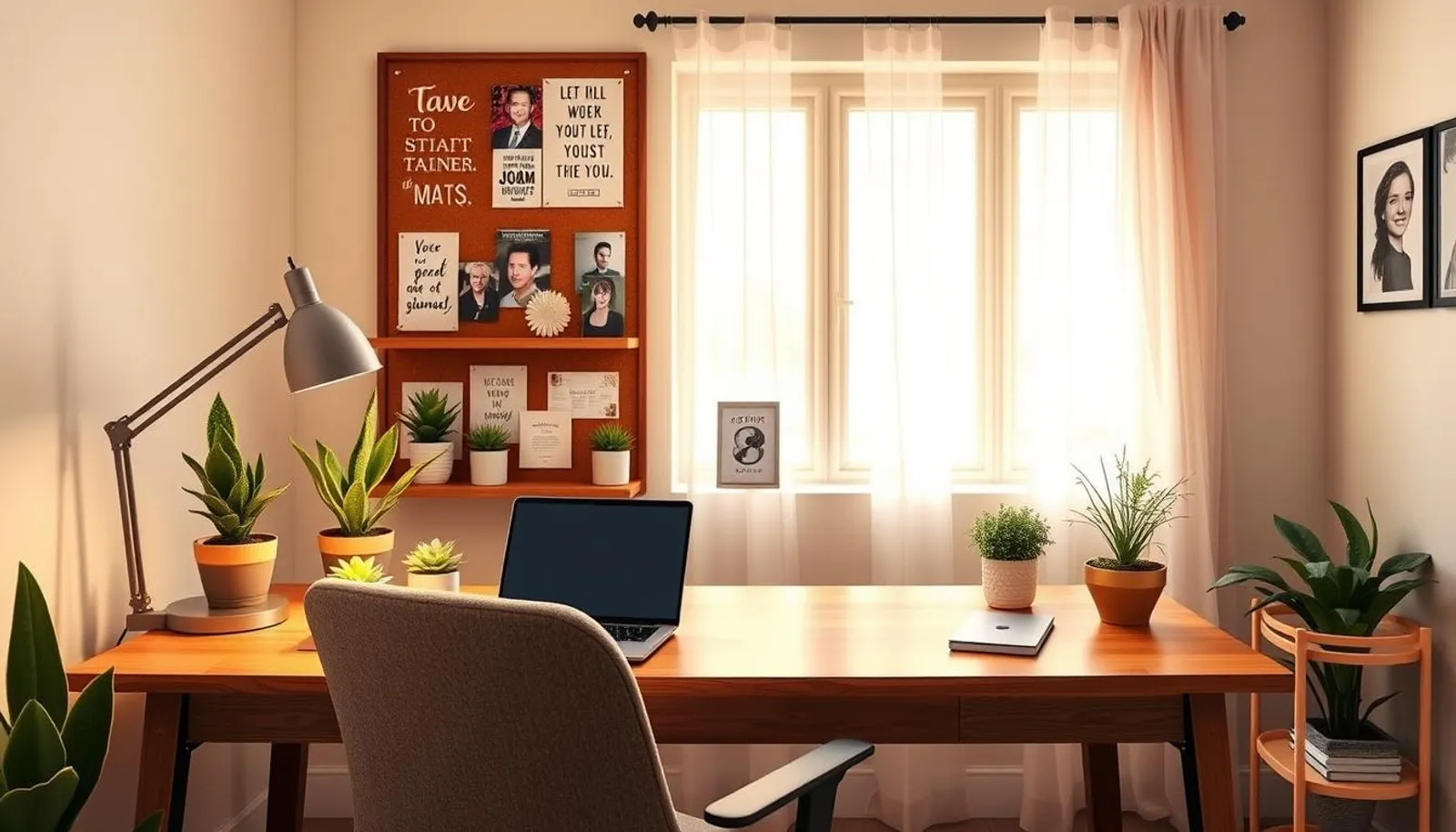

25 min read
Surprisingly, Americans spend nearly 90,000 hours at a desk over a lifetime, yet most home offices start as an afterthought. That gap shows why a thoughtful, budget home office matters: you dont need a big budget to make hours spent working feel comfortable and inspiring.
This short section shows how to begin a smart home office makeover with simple priorities. Start with good light, a supportive chair, and a work surface sized for your tasks. These essentials form the backbone of an affordable workspace design that looks intentional rather than patched together.
Small spaces can become a stylish office setup by using DIY home office ideas like reclaimed-wood desks, fold-down surfaces, or IKEA hacks. For more inspiration and project ideasshelving, storage, and craft-focused layoutsexplore this practical collection on Pinterest for real, testable concepts: DIY home office and craft room.
Key Takeaways
- Prioritize lighting, seating, and a functional work surface first.
- Small corners, closets, or a spare wall can host a stylish office setup.
- DIY solutions and IKEA KALLAX/Alex combos give high-end looks on a budget.
- Repurposed furniture and simple decor lift a budget home office quickly.
- Plan storage and workflow to keep the space productive and clutter-free.
Why a budget-friendly home office matters for productivity and style
A dedicated workspace at home shapes how you work and how you feel. A tidy, intentional area reduces distractions and makes it easier to switch into focused mode. Pick a corner, a closet conversion, or a spare nook to separate tasks from daily life.
Benefits of a dedicated workspace at home
Having a single spot for work helps build routine and preserves mental boundaries. A well-placed desk and good storage keep gear organized so you spend less time hunting for supplies and more time getting things done.
When your space looks put together, video calls feel more professional. A productive home workspace signals reliability to clients and teammates during meetings.
How affordable design boosts creativity and reduces stress
Smart, inexpensive choices spark fresh ideas. Simple decor like a mood board, curated wall art, or a few plants can lift spirits and encourage creative thinking.
Clutter-free layouts lower anxiety and make priorities clear. Use DIY home office ideas to personalize shelving, lighting, and surfaces without overspending.
Key essentials to prioritize: lighting, seating, and work surface
Good lighting matters most. Aim for natural light near a window and add task lamps to cut glare on screens. Layered lighting prevents eye strain during long sessions.
Comfortable seating is a small investment with big returns. Choose an ergonomic chair with lumbar support or an adjustable option to protect posture and energy.
Match desk size to the room and your workflow. A work surface with built-in storage or nearby shelving keeps tools in reach. For small spaces, wall-mounted desks and fold-away setups work well.
For practical examples and layout inspiration that emphasize affordable workspace design and a stylish office setup, check the guide on home office designs that elevate productivity and. It features DIY home office ideas that help you build a productive home workspace on a budget.
Choosing the right spot: small-space placement and layout tips
Finding the best nook for work starts with mapping daily routines and light patterns. Pick a spot that supports focus and privacy when needed. Small-space placement can turn an awkward corner or a guest alcove into a productive area without major renovation.
Convert corners, closets, and underused rooms into practical offices by measuring first and planning storage. You can convert closet to office with a fold-away desk, a few shelves, and task lighting. Use modular shelving or built-in cabinets to keep supplies off the desktop.
Convert corners, closets, and underused rooms into functional offices
Corners often work well for an L-shaped desk that defines a zone while keeping traffic clear. A hallway end or stair landing can host a slim console desk and wall storage. If you have a guest room, a wall bed with a fold-down desk creates a dual-purpose solution.
Closet conversions give great ROI on space. A shallow desktop, vertical shelving, and a door that closes keep work out of sight. For step-by-step ideas, review compact systems and fold-away furniture on resource guides like the featured designs at small home office ideas.
Open-plan vs. tucked-away setups: pros and cons for focus
Open-plan layouts bring light and a social vibe that helps collaboration. They suit video calls and creative work that benefits from easy access. Noise and distractions rise with traffic, so plan boundaries like area rugs or low partitions.
Tucked-away nooks offer quieter conditions for deep work. They work best in bedrooms or closets that convert easily. Choose a tucked layout when concentration and privacy are priorities.
Layout tips for two-person or shared home office setups
For a shared home office layout, aim for clear individual zones. Mirror-image desks help each person have dedicated space. Use shared storage such as IKEA KALLAX units between workstations to hold supplies and reduce overlap.
- Place desks back-to-back to keep screens private.
- Use an L-shaped shared desk to give each person elbow room.
- Add a slim filing cabinet or floating shelves to divide space without blocking light.
Small adjustments like matching task lamps, cable channels, and labeled bins keep a two-person setup calm and efficient. These simple moves support affordable workspace design while making the most of tight footprints and inspiring practical DIY home office ideas.
DIY home office ideas
Start small and focus on a tidy work surface with practical storage. Simple projects deliver a high-end feel without a large budget. Pick one focal piece and build around it for a cohesive, stylish office setup.
Simple DIY desks: reclaimed wood, door-top desks, and IKEA hacks
A reclaimed wood desk brings warmth and character. Salvaged boards sanded and sealed make a durable top that pairs well with metal hairpin legs or filing-cabinet bases. A reclaimed wood desk becomes the rooms anchor and ages beautifully over time.
A repurposed interior door or slab works as a makeshift desktop. Set it on two cabinets or sawhorses and trim the edge for a polished look. This door-top desk approach is fast, sturdy, and budget-wise.
IKEA hacks expand possibilities. Use KALLAX units or an ALEX drawer unit as supports and add a custom top. These IKEA hacks create storage-rich workstations that look custom without the price tag.
Affordable storage builds: cube units, floating shelves, and pegboards
Affordable storage builds keep supplies organized and surfaces clear. Cube shelving fits under or beside desks to stash paper and tech. Match bins and baskets for a neat, consistent look.
Floating shelves free floor space and display reference books, plants, or task lighting. Install them at varied heights to store items you need within arms reach while keeping clutter off the desk.
Pegboards and wall grids hold tools, cords, and small bins for office essentials. Customize hooks and containers to fit your routine. This vertical organization is ideal for craft stations and busy desks.
Creative partitions and room dividers to define your workspace
Define the office zone with inexpensive partitions. A lightweight folding screen separates a corner from living space without construction. Choose a patterned fabric or woven panel to add texture and privacy.
Bookshelves work as room dividers while adding storage on both sides. Position a low shelf behind the desk to create a visual boundary that still keeps the room open.
Hanging curtain panels offer a soft, mobile barrier. Install a simple tension rod or ceiling track to create an instant backdrop that hides the workspace when guests arrive.
| Project | Estimated Cost | Time to Build | Style Impact |
|---|---|---|---|
| --- | --- | --- | --- |
| Reclaimed wood desk with hairpin legs | $80$200 | 48 hours | Warm, rustic, high-end look |
| Door-top desk on filing cabinets | $50$150 | 24 hours | Sturdy, classic, space-saving |
| IKEA hack using KALLAX + custom top | $60$180 | 26 hours | Clean, modular, customizable |
| Floating shelves + pegboard wall | $30$120 | 13 hours | Organized, modern, functional |
| Folding screen or curtain partition | $20$100 | 30 minutes2 hours | Private, flexible, decorative |
Repurposing furniture turns secondhand finds into practical workstations without breaking the bank. A dresser, console table, or thrifted table can become a desk with a little modification and the right height adjustment. These DIY home office ideas help you build a unique space that feels polished and personal.
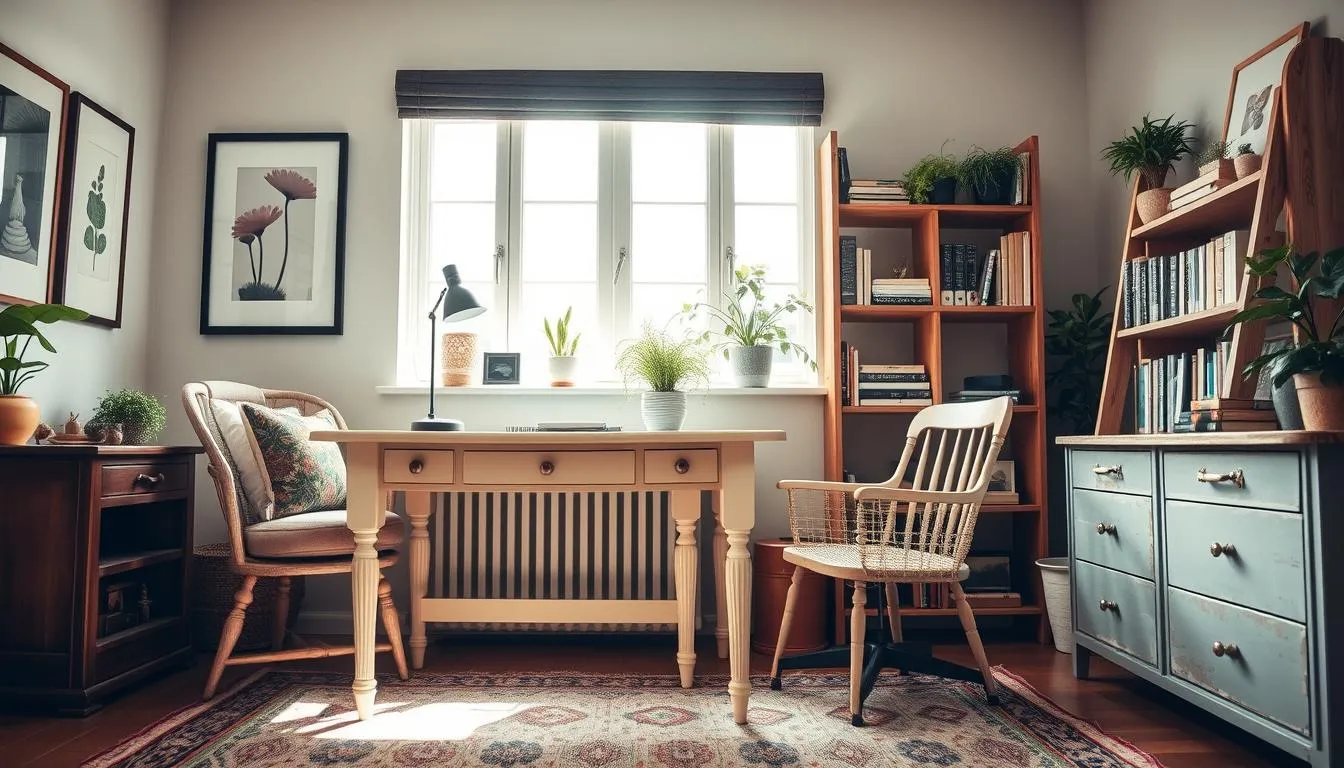
Start by assessing scale and storage. Removing drawers or cutting a knee hole in a dresser gives legroom while keeping storage for supplies. Sanding and a fresh coat of paint modernizes vintage pieces. Bright hues like orange or muted tones update character pieces for a stylish office setup.
Shopping smart matters. Thrift stores and estate sales often yield great bargains; I once found filing cabinets for just $10 each that became the base of a sturdy desk. For more inspiration, browse a curated collection on repurposed office furniture to see layout and finish ideas.
Pair old and new for balance. Match a vintage desk with a contemporary task chair or an IKEA lamp to keep the room current. Mixing textureswood, metal, and fabriccreates depth and makes a thrifted furniture office look deliberate rather than patched together.
Keep practicality in mind. Place the repurposed desk near a window to maximize natural light and make the space feel larger. Use drawer organizers and labeled bins to keep supplies tidy. These small choices support productivity while preserving the charm of well-loved pieces.
| Project | Typical Cost | Time | Key Tip |
|---|---|---|---|
| --- | --- | --- | --- |
| Desk from two filing cabinets | $20 (thrifted cabinets) | 12 hours | Use a reclaimed tabletop and secure with brackets |
| Dresser turned desk | $30$80 | 26 hours | Remove central drawers and reinforce top for knee space |
| Console table to slim desk | $15$50 | 13 hours | Sand and paint for a cohesive modern finish |
| Thrifted furniture office refresh | $10$100 | 14 hours | Choose neutral paint and bold accent accessories |
Good lighting makes a home office functional and welcoming. Start by planning how daylight and lamps work together. Smart choices help you maximize natural light while cutting glare and keeping costs low.
Maximizing natural light and minimizing glare
Place your desk near a window to capture daylight without facing direct sun that creates glare. Use sheer curtains or adjustable blinds to soften harsh rays. Position monitors perpendicular to windows to protect your eyes and keep video calls clear.
Task lighting and stylish desk lamps from budget sources
Add focused fixtures for close work. An adjustable arm lamp gives precise task lighting for reading and papers. Look for affordable options from IKEA or secondhand stores like Goodwill and Craigslist. A well-styled lamp doubles as decor, so choose finishes that match your palette.
Layered lighting tips for ambiance and productivity
Mix three types of light: ambient, task, and accent. Overhead LEDs give even ambient coverage. Task lighting supports focused work. Accent lights highlight artwork or shelves and add warmth. Use dimmable bulbs to shift mood from intense work to relaxed brainstorming.
- Tip: Swap bulbs to daylight (5000K) for alertness during work hours, and warmer tones (27003000K) for evening wind-down.
- Tip: Wall-mounted lights save desk space and create a clean look without losing function.
- Tip: Hunt for stylish desk lamps at flea markets and outlet stores to keep your affordable workspace design polished.
Smart shelving and vertical storage solutions
A work surface with enough storage keeps supplies within reach and off the floor. Vertical storage solutions make small home offices feel larger by moving gear up, not out. Use what you have, mix new pieces with simple installs, and keep the layout flexible for changing needs.
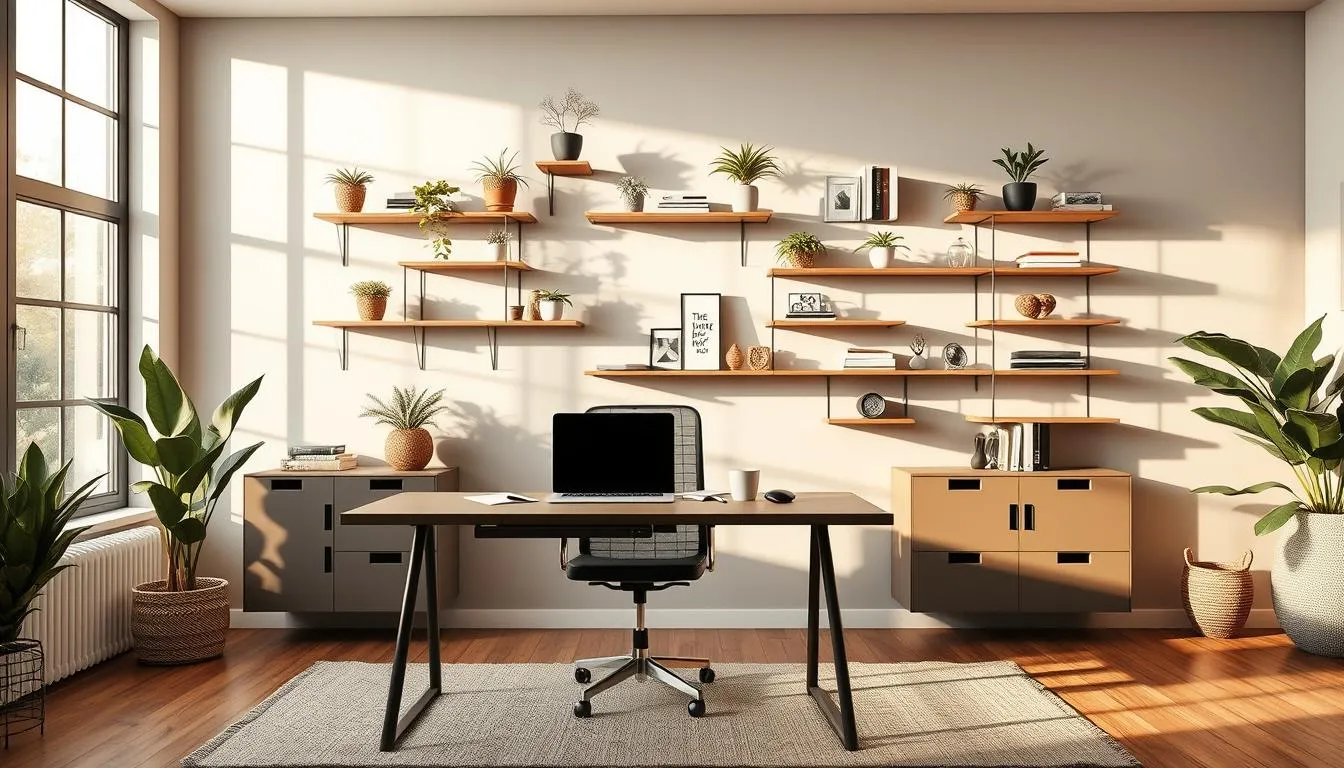
Floating shelves, modular units, and IKEA KALLAX hacks
Floating shelves are quick to install and give a clean, modern look. Place them above the desk to hold printers, books, and bins. Modular units give a custom fit; stack cubes for taller storage or side-by-side for a wider work area.
IKEA KALLAX hacks turn cube storage into desks, craft centers, or media walls. Pair a KALLAX with an ALEX drawer unit for a tidy combo that hides cables and keeps paperwork sorted. These DIY home office ideas suit renters and homeowners alike.
Using wall grids and pegboards for supplies and inspiration
Wall grids and pegboards keep tools and supplies visible and reachable. Mount a pegboard behind the monitor for scissors, rulers, and notepads. Add baskets and hooks to adapt the layout as needs change.
Pinned notes, photos, and a small calendar turn a pegboard into a visual command center. Good pegboard organization helps craft workers and remote professionals stay productive without taking up desk space.
How vertical storage saves floor space in small offices
Vertical storage frees the floor for a chair and movement, not boxes. Full-wall shelving or tall cabinets store bulk items while keeping the desk clear. Clear bins and labeled cubes speed retrieval when time is tight.
Implement these solutions with affordable hardware and common IKEA parts to achieve a streamlined setup. Small changes add up to a workspace that works harder, looks better, and stays organized.
Affordable decor that makes a stylish office
Style and function can coexist on a budget. Start with a clear plan for lighting, seating, and a solid desk surface, then layer in pieces that make the room feel intentional. Small swaps and curated accents turn a practical space into a creative home office design that reflects your work habits and personality.
Inexpensive wall art and gallery arrangements
Hang affordable prints from Society6 or Etsy and mix frames from Target for a cohesive gallery wall. Use a consistent mat color or frame finish to unite mismatched pieces. Create depth with a central focal print and surround it with smaller photos, postcards, or typographic quotes.
Try clipboards, washi tape, or inexpensive floating frames to rotate work samples or seasonal prints. These options keep the display fresh without expensive framing costs and add visual interest to your stylish office setup.
Rugs, textiles, and color choices to set the mood
Define zones with a low-cost rug from Wayfair or IKEA. A rug anchors the desk area and adds warmth to hardwood floors. Choose textiles that reflect your workflow: calming blues and greens for focus, bright accents for energy.
Introduce texture with a throw, seat cushion, or woven basket. Swapping cushion covers and lamp shades offers a big visual change for little money. These touches support a creative home office design while preserving budget.
Personal touches that don’t break the bank
Add character through thrifted finds, flea market frames, and small vintage objects. An inspiration board with pin-able photos, ticket stubs, and postcards keeps motivation in view without high cost.
Use inexpensive planters, a favorite mug for pens, or framed family photos to personalize the space. These low-cost items make a stylish office setup feel lived-in and uniquely yours.
Greenery and low-maintenance plants to brighten the space
Plants are a simple way to add life and style to a budget office setup. They lift mood and soften a room without a big expense. Pick choices that suit light levels and attention spans to keep your desk fresh and inviting.
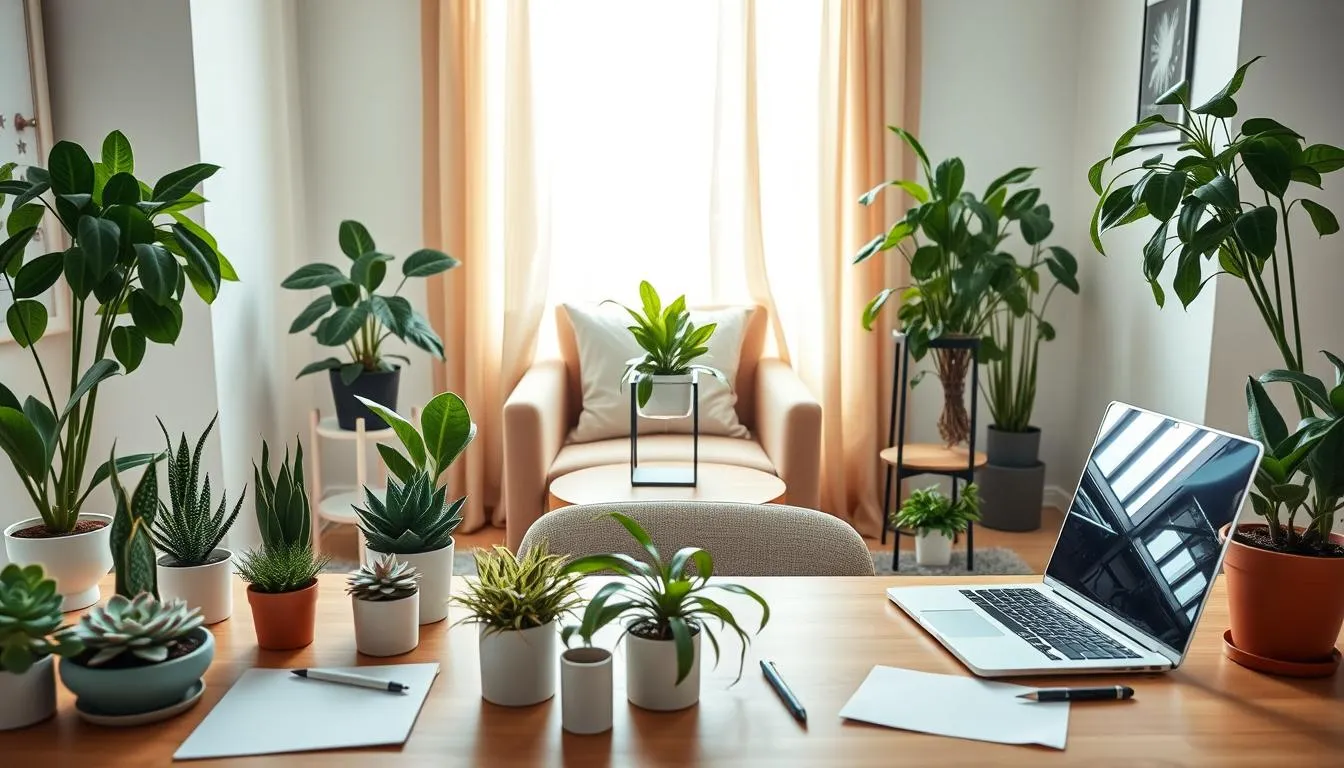
Best low-light, easy-care plants for home offices
Choose resilient varieties like spider plant, golden pothos, and snake plant. Small succulents such as Echeveria or Haworthia sit well on a desk and need only occasional watering. ZZ plant endures low light and irregular care, making it ideal for busy schedules.
How plants improve air quality and mood while staying affordable
Research and reviews from outlets like CNET highlight that common houseplants can reduce perceived stress and add a calming visual focus. Many inexpensive options boost perceived air freshness and offer psychological benefits that help focus.
Buy starters from Home Depot, Lowes, or local nurseries to keep costs down. Repot into thrifted containers or inexpensive ceramic planters to match your affordable workspace design without overspending.
Creative planters and placement ideas for small desks
Maximize surface area with vertical placement. Use floating shelves, wall hooks, or a small hanging planter over the corner of the desk. A trio of tiny succulents on a raised tray creates interest without clutter.
Repurpose tins, mason jars, or a painted coffee can as planters for a DIY home office ideas boost. Match planter finishes to your color palette for a cohesive look that stays true to affordable workspace design and keeps the space practical.
Organization hacks and cable management for a clean desk
A tidy workspace boosts focus and makes creative home office design feel achievable. Start by clearing the desktop and keeping only daily essentials within arms reach. Adequate surface storage reduces stress and sets the stage for lasting organization hacks that match your workflow.
DIY drawer organizers are easy to build from shoe boxes, cardboard, or small acrylic trays. Cut and stack compartments to separate pens, chargers, and sticky notes. Repurpose muffin tins or ice cube trays for tiny supplies. These simple projects cut clutter and save money while delivering neat, accessible storage.
Use desk trays and modular cube inserts to corral papers and tech. IKEA Alex drawers pair well with small bins for sorted supplies. For quick examples and cord-hiding ideas, see this practical guide on hiding computer cords.
Cable management starts with a mounted, flat plug power strip under the desk. Secure extension cords beneath the desk lip with screw-mounted clips and run cords down legs with clear zip ties. Velcro One Wrap or a Velcro brand cable sleeve keeps excess cord bundled and reusable for future adjustments.
Clear cable clips and silicone protectors conceal wires across surfaces and rugs. A slim cable raceway hides visible runs along baseboards. For lamps and laptops, mount the power bar on the desk side farthest from the door to keep cords out of sight when you enter the room.
- Make cord paths intentional: route along desk undersides and through cabinet backs.
- Use clear hooks and screw clips where paint-matching is needed.
- Store long cords under the desk with Velcro straps to avoid tangles.
Keep a weekly routine for decluttering. Sort mail, file documents in acrylic boxes or baskets, and toss what you dont need. A five-minute nightly reset keeps clean desk tips practical and sustainable. Short, regular maintenance prevents buildup and preserves a productive space.
Small investments in a cable management organizer box, flat plug power strip with USB ports, and a heavy-duty hook and loop strip pay off fast. These items support the overall creative home office design and make your desk feel calmer and more efficient.
Color psychology and paint tips for an inviting home office
Pick colors that match how you work. Use calming office colors like soft blues or muted greens when you need long stretches of focus. Choose energizing hues such as light yellow or warm apricot when your tasks demand creativity and quick thinking.
Keep the palette simple. A neutral base with one accent tone reduces visual clutter and offers flexibility for decor changes. Accent walls, painted shelves, or a bold door bring personality without repainting the whole room.
Think about finishes. Matte paints hide imperfections and lower glare for focused work. Satin or eggshell reflects more light and brightens a small space, which can help when natural light is limited.
Choosing calming vs. energizing hues for your workflow
Match rooms to tasks. Use calming office colors for detailed work, financial tasks, or long writing sessions. Save energizing shades for brainstorming corners, whiteboard walls, or craft stations where momentum matters.
Balance matters. If you love red or orange, apply them as accents on trim, art, or pillows instead of full walls to avoid overstimulation. Small pops of color can boost mood without overwhelming the senses.
Accent walls and inexpensive paint techniques that add style
Try low-cost approaches like striping, two-tone layouts, or a painted panel behind a desk. These techniques add depth and frame your workspace with minimal paint and effort.
Use textiles to extend color choices. A rug, curtains, or a chair cover can echo an accent wall and complete the look at a low price point.
How color pairs with lighting and dcor for cohesive design
Assess light at different times of day before you commit. Natural light pairs well with cooler palettes, while warmer tones feel inviting in dim spaces. Layered lamps let you tune brightness and color temperature.
Bring in artwork, plants, and accessories to tie paint to function. A creative home office design uses color, texture, and real materials to craft a room that supports your work and reflects your style.
For more guidance on color psychology and practical paint choices, see this post from a professional painting source: color psychology home office.
Budget-friendly tech and ergonomic upgrades
Comfortable seating is a basic must for any home workspace. Invest in an ergonomic chair or add lumbar support to a thrifted office seat to protect posture and keep energy up through long workdays. Small changes bring big gains in focus and comfort.
Keyboard trays and monitor stands lift your setup into a neutral position. Adjustable trays reduce wrist strain. Sturdy monitor stands place screens at eye level. These simple ergonomic upgrades pair well with affordable workspace design and fit into most budgets.
Upgrading a webcam, task lamp, or bookshelf speaker can refresh your workflow without a big spend. Look for webcams with 1080p video and side-lit desk lamps for clear, even lighting. Compact Bluetooth speakers add better audio for calls and playlists.
Many DIY home office ideas include using IKEA parts, salvaged wood, or small hardware hacks to create monitor risers and laptop stands. A trimmed bookshelf or a stack of vintage books can work as a quick riser while you shop for a permanent solution.
Outlet stores, certified refurb sellers, and local secondhand marketplaces are smart places to find deals. Search for certified refurbished monitors, keyboards, and chairs to save money while still getting reliable gear. Garage sales and thrift stores often yield unexpected ergonomic finds.
To balance cost and quality, set priorities: secure a good chair first, then add keyboard and monitor adjustments, and finish with tech upgrades that improve calls and lighting. This staged approach supports a practical, affordable workspace design that lasts.
Conclusion
Creating a stylish office setup on a modest budget is entirely possible when you focus on a few high-impact elements. Prioritize good lighting, a comfortable chair, and a solid work surface with storage. These basics turn corners, closets, or small nooks into functional rooms for work without a large investment.
DIY home office ideas like IKEA hacks, KALLAX builds, thrift-store makeovers, and simple floating shelves deliver big style for little cost. Repurposed furniture, smart shelving, and budget-friendly paint choices make a polished, personal space that supports focus and creativity.
Practical stepsbuild a DIY desk, add low-maintenance plants, install task lighting, and manage cablescombine to form an affordable workspace design that feels intentional. With these moves, your budget home office can be both productive and inviting.
Use small, consistent updates over time to refine your setup into a stylish office setup that works for your day-to-day needs. These affordable choices keep costs low while delivering a workspace that helps you do your best work.
FAQ
What are the must-have essentials for an affordable, stylish home office?
Prioritize three essentials: good lighting, comfortable seating, and a functional work surface with adequate storage. Maximize natural light when possible, add an adjustable task lamp, choose an ergonomic chair (new or secondhand), and use a desk with drawers or nearby cube storage to keep gear organized. These basics deliver both style and productivity without a large budget.
Where in my home can I set up a modern home office on a budget?
Modern home offices can fit into many placesa quiet corner of the living room, a bedroom, a guest room, a basement, an attic, or even a converted closet. Choose a spot that offers the privacy and light you need. Tucked-away nooks work well for focused work; open-plan corners offer sociability and daylight but may need screens or rugs to define the zone.
Can I build a durable desk without spending much money?
Yes. Popular budget DIY desk ideas include reclaimed-wood tops, door-on-cabinet desks, and simple IKEA hacks using KALLAX or Alex units for support. A repurposed thrift-store table or dresser can become a desk after sanding and painting. These options save money and create a custom, high-end look when finished thoughtfully.
How do I add effective storage in a small home office?
Use vertical storage: floating shelves, modular units, cube storage (KALLAX), wall grids, and pegboards. Install shelves above the desk and mount pegboards for frequently used tools. Use drawer organizers, acrylic boxes, and baskets to separate supplies, and mount power strips under the desk to free up surface area.
What are inexpensive ways to make my workspace feel cohesive and stylish?
Affordable touches include gallery walls with inexpensive prints, a well-chosen rug to anchor the zone, coordinated textiles, and a curated inspiration board. Paint an accent wall or use peel-and-stick wallpaper for impact. Mix thrifted vintage pieces with modern items for character without high cost.
How can I create a two-person or shared home office that stays organized?
Use mirrored or L-shaped desks, shared KALLAX + Alex combinations, and clear zone separationseach person gets dedicated storage and a defined work surface. Position desks to minimize glare and use vertical storage between stations to keep supplies accessible but separate. Consider matching storage cubes or labels to maintain order.
What lighting strategy works best for an affordable workspace design?
Layer lighting: maximize natural light, add an adjustable desk lamp for tasks, and include ambient or accent lighting to reduce strain. Use blinds or sheers to control glare. Budget-friendly options include IKEA lamps, secondhand finds, and wall-mounted lights that free desk space.
Which low-maintenance plants suit a small home office?
Low-light, easy-care plants like spider plants, golden pothos, and small succulents are ideal. They add life and improve mood without much upkeep. Use inexpensive planters, repurposed containers, or hanging pots to save desk space while keeping greenery on shelves or windowsills.
How do I keep cables and tech clutter under control on a tight budget?
Conceal cables with clips, sleeves, and mounted power strips under the desk. Use cable boxes or inexpensive trays to group adapters. DIY monitor stands and affordable keyboard trays free surface area. Schedule a quick weekly declutter to file papers and clear desk surfaces to maintain focus.
Is it worth refinishing thrifted furniture for a home office?
Yes. Sanding and painting thrifted dressers or tables modernizes them and costs far less than new pieces. Converting a dresser into a desk by removing drawers or cutting a knee hole is a budget-friendly way to gain storage and character. Pair refinished pieces with contemporary chairs or lamps for balance.
What color choices best support focus and creativity in a home office?
Color affects mood: calming hues like soft blues support focus, while light yellows or energizing accents boost creativity. Use accent walls, textiles, or framed prints to introduce color without repainting the whole room. Pair colors with natural and layered lighting for a cohesive feel.
Where can I find affordable ergonomic chairs and tech upgrades?
Look at outlet stores, refurbished marketplaces, thrift shops, and online refurb sellers for ergonomic chairs, monitor stands, and keyboard trays. Garage sales and local marketplaces often have good deals on lamps and webcams. Small investments in ergonomics and task lighting pay off in comfort and productivity.
What DIY storage and organization hacks work for craft-focused home offices?
Use pegboards and wall grids for tools and inspiration, cube storage for bins, and clear acrylic boxes for small supplies. Build full-wall desks with shelving above, or create cube-storage desks for craft tables. IKEA hacks and repurposed containers (jars, magazine holders) keep supplies visible and organized.
How can I create privacy without building permanent walls?
Try folding screens, curtains, bookshelf dividers, or strategically placed rugs and plants to define the workspace. These inexpensive partitions are flexible and help reduce distractions in open-plan rooms while keeping the setup temporary and affordable.
What small upgrades make a big difference in a budget-friendly office?
Small changes with big impact include better task lighting, an ergonomic chair or cushion, a neat cable system, a well-organized set of drawers or cubes, a few plants, and a curated inspiration board. These choices improve comfort, reduce stress, and make a modest space feel intentional and stylish.